Silent Horizons of Marine Batteries and Hybrid Propulsion
The sea at dawn is a quiet miracle. The horizon glows faintly with promise and the harbour water is a mirror holding every reflection of sky and vessel. It is in these moments of stillness that we sense things shifting beneath the surface, just as those early marine innovators sensed change waiting to be born. The scene might be serene, but a revolution was unfolding quietly, not with clanking engines and smoky exhaust but with the soft hum of electricity finding new life at sea.
In the spring of 2025 people in harbours from Bergen to Rotterdam were beginning to talk about technology that once belonged only to electrical engineers and futurists: large scale batteries storing immense amounts of energy and hybrid propulsion systems that allowed ships to operate in silence, in comfort, in harmony with nature. The movement was not dramatic at first. Nobody broadcast it with fanfare. It crept into consciousness like dawn light spreading over still water. But the moment it crystallised for everyone was unforgettable.
In a modest Norwegian port, a ferry approached the quay with no smoke and no growl. Residents paused and pointed. Tourists snapped photos. Fishermen lowered their nets with puzzled smiles. There was no indication of the invisible transformation beneath the vessel’s hull, but everyone felt it. Here was a ship powered by something that felt closer to nature than tradition. Here was the future of the sea, rising in silence.
The Dawn of an Idea
The story begins not in boardrooms but in workshops, labs and quiet conversations among engineers who looked at traditional maritime engines and wondered whether there might be another way. For generations vessels had relied on burning fossil fuel, a practice that churned oceans of power but left wake after wake of emissions, noise and wear. Many asked themselves whether technology could find a path that honoured the water that sustained us.
At the heart of this effort were companies already versed in electrification and industrial innovation. ABB, a names often spoken in marine circles, had been experimenting for years with energy solutions that could marry power and efficiency. Wärtsilä, a Finnish engineering stalwart, was already working on hybrid solutions that blended engine and battery power. In Canada Ballard Power Systems was refining fuel cell stacks for varying applications while Corvus Energy became known for its robust marine battery modules. In Germany and Norway MAN Energy Solutions and Rolls Royce Marine which later became part of Kongsberg Maritime were investing in battery management systems and propulsion interfaces that could talk to engines like old friends.
Even tech companies like Siemens brought expertise in power electronics and automation into the maritime space. Universities such as the Technical University of Denmark and Delft University of Technology in the Netherlands became fertile ground for research where students and professors studied marine efficiency with contagious enthusiasm. These were ordinary people with extraordinary faith in a future where ships whispered instead of roared.
It sounded fanciful at first but like the gentle currents that shape coastlines over time, the idea gathered momentum. And it was not just engineers. Captains, sailors, harbour workers and environmental scientists began to imagine a world where vessels did not announce their arrival with sound and smoke. Conversations in shipyard canteens in Hamburg and Copenhagen shifted from routine maintenance to something brighter, something hopeful.
Eureka Moments and Quiet Triumphs
One engineer remembers a breakthrough test on a cold evening in an insulated lab near Oslo. The battery array glowed faintly and the power management software hummed in its cradle. A younger colleague whispered We might actually be on to something and the room erupted in laughter because for once they were not exhausted or frustrated. They were hopeful. This was the sort of moment the textbooks never prepare you for: a quiet release of tension and the thrill of discovery that came without spectacle but with deep satisfaction.
Another story comes from a ferry crew in the Netherlands who first piloted a hybrid vessel into the Amsterdam canals. Tourists lined the bridges expecting the usual rumble. Instead they heard only water lapping against the hull and spontaneous applause filled the promenade. Crewmen laughed as schoolchildren waved and asked if the ship was a ghost. The captain quipped back that yes it was a ghost but the friendliest ghost you would ever meet.
These stories matter because they reveal more than technology. They reveal human connection. The way a child’s smile at a silent ferry or a grandmother’s delight at a fresh breeze can make innovation real in people’s hearts.
How the Technology Works
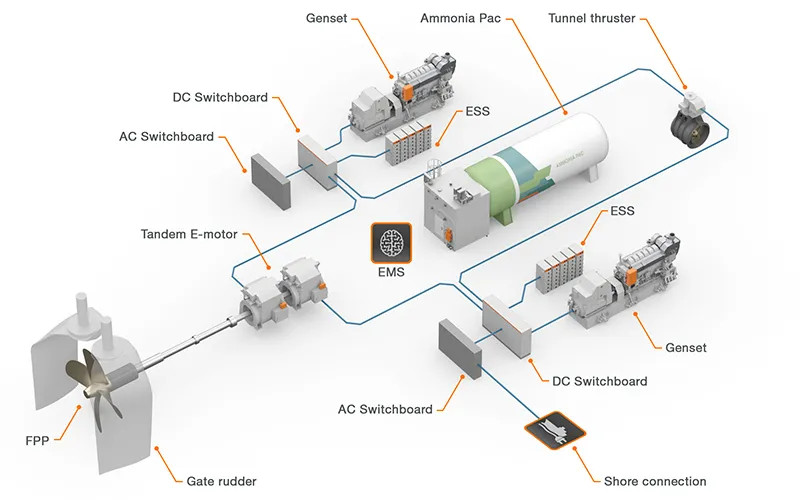
While the experience of quiet propulsion feels like a miracle to passengers and onlookers, behind it there is elegant engineering. High capacity batteries made from advanced Lithium Ion chemistries and newer materials store immense amounts of energy. These batteries power hotel loads like lighting climate control kitchens and entertainment systems but also contribute to the propulsion motors at low speeds or in port.
When the system needs more energy than the batteries can immediately supply a generator or engine steps in. But because of the batteries the engine can run at optimum efficiency rather than jumping on and off or revving wildly to meet variable demand. This saves fuel and reduces wear. And because the system can manage the power intelligently it reduces emissions and creates a much smoother experience aboard.
Smart power management software developed by companies such as ABB and Siemens acts like an orchestra conductor. It watches energy use in real time, deciding when to draw from batteries and when to top up from engines or shore power during charging. It is not a simple system. It is the result of countless hours of collaboration and adjustment.
Real Ships, Real People, Real Impact
All over the world examples of this technology are already operating. Ferries in Norway, such as those operated by Fjord1, have begun to adopt battery and hybrid systems on short sea routes. Residents there talk about the difference in air quality and how the silence feels like a blessing borne on the breeze. Workboats in Canadian waters have embraced Corvus Energy battery packs for harbour duties, giving tug crews quieter shifts and marine biologists a clearer acoustic environment for their research.
In Singapore a research vessel powered by hybrid systems allows scientists to drift almost noiselessly during surveys so that the data they collect is not contaminated by engine noise. Passengers on small expedition cruise ships in the Mediterranean are finding that wake time feels almost sacred now that engines can be quiet while at anchor.
Even luxury yachts are joining the wave of adoption. Owners who once defined comfort by the size of a galley or the length of a pool now speak with pride about the silent cruise into a cove under battery power. For them it is more than convenience. It is an acknowledgment that wearing the sea lightly means letting it be.
The Financial Story
Initially critics dismissed battery hybrid systems as too expensive, too niche or too unproven. And it is true that early installations raise upfront costs more than traditional propulsion systems. Batteries, power converters and intelligent management systems are not cheap. Integrating them into a vessel requires expertise and careful planning.
But over time the financial picture is changing. Hybrid propulsion allows engines to run more efficiently, which cuts down on fuel consumption. As fuel prices fluctuate and often rise, the appeal of using stored electric energy at sea and in port becomes very real. Ships that can operate on batteries for hours each day use far less fuel than their traditional counterparts.
Reduced maintenance also plays a role. Engines that do not constantly ramp up and down wear more slowly. Components last longer. Crew are freed from some routine work and can focus on other tasks. Some insurance companies are beginning to offer more favourable terms on vessels with reduced risk profiles because the hybrid systems produce less heat and vibration which, in turn, lowers the chance of mechanical failure.
Harbour authorities and ports are also starting to see economic benefits. Cities investing in shore power infrastructure so ships can recharge while at dock are finding that cleaner air attracts more tourism and improves quality of life for residents. Ferries that once rattled windows as they approached now whisper in with courtesy.
Analysts in London, Singapore, Rotterdam and Vancouver speak of hybrid systems as a smart long term investment rather than a short term expense. Some models now suggest that over five to eight years the savings on fuel alone could offset much of the initial difference in cost. When you combine that with environmental benefits regulatory compliance and public goodwill the case becomes compelling.
A Greener Planet and a Quieter Sea
Perhaps the most profound part of the story lies not in economics but in sustainability. When ships emit less carbon dioxide and particulates the atmospheric impact is significant. In busy harbours around the world you can literally see the difference where hybrid vessels operate. Locals speak of mornings without soot on windowsills and fishermen notice fish and bird life returning to waters previously clouded with smoke.
Environmental scientists tracking coral reefs and migrating marine mammals have noticed changes too. Underwater noise pollution once a constant din that confused dolphins and masked whale calls has begun to fade in places where quiet vessels pass. It is not a complete cure but it is unmistakable progress.
Communities share stories of changes that matter to them. In Copenhagen a café owner on the waterfront told a journalist that people now linger longer outside at sunset because the air feels cleaner and the sound of water is no longer accompanied by machine rumble. In Nova Scotia fishermen remark that seals no longer flee approaching vessels as they once did. These anecdotes may sound small but they reflect real changes in ecosystems and in people’s everyday lives.
Who Will Embrace It First?
The early adopters of hybrid propulsion and battery energy systems are those with short sea routes and frequent port calls such as ferry operators in Scandinavia and Europe but the technology is spreading quickly. Harbour tugs in North America, research vessels in Asia and private yachts in the Mediterranean are all joining the wave of innovation. Cruise lines are looking closely at hybrid systems for next generation ships that could operate with minimal emissions while in fragile ecosystems such as fjords or coral atolls.
Energy and shipping analysts say the next decade could see hybrid propulsion adopted more widely even among short sea cargo operators as port charging infrastructure improves. Cities with clean air goals are looking at incentives for zero emission vessels. Some nations are already providing tax breaks and grants for companies that electrify marine fleets.
The Human Stories That Matter
The faces behind this shift are as varied as the ships from which this technology emanates. There is the young engineer in Stavanger who teared up on her first trial run because the vessel came into port without the usual mechanical growl that she had grown up hearing. There is the ferry captain in Amsterdam who said he had never seen passengers so excited to board a ship that they could hear only water and wind. There is the small child in Bergen who once asked his parents whether the ferry was a ghost ship because it made no noise at all.
There are shipbuilders in Hamburg who speak proudly of every vessel they help modernise because it means better work for their children’s future. There are environmental advocates in Paris and Vancouver who feel hope rising because the ocean is beginning to breathe a little easier. And there are ordinary people everywhere who simply enjoy the pleasure of a peaceful harbour and cleaner air.
A Quiet Revolution With a Bright Future
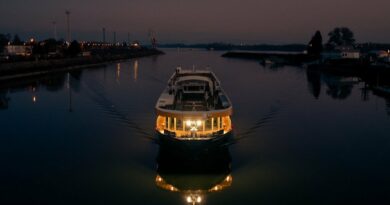
And so we come back to that harbour at dawn. The water mirrors the rosy sky. A ferry glides in with barely a whisper. A research vessel drifts silently on its way to study life beneath the waves. A small yacht arrives to anchor in a cove, its guests unaware at first of the extraordinary technology beneath their feet.
Takeway from GrabMyBoat
We are witnessing not a loud upheaval but a shift as gentle and profound as a new sunrise over still water. Battery energy storage and hybrid propulsion may have begun as an engineer’s idea, a whisper among innovators. But today it is a human story, a story of hope, community, respect for the natural world and the courage to imagine a future where the quietest technology can speak the loudest truth.
“Here the sea does not roar. Here the sea whispers. And in that whisper we find a new horizon worth chasing“.