Ships That Think for Themselves
There is a moment before dawn when the harbour water is still and silent and the horizon seems to hold its breath. In that quiet between night and day a new kind of vessel begins to move. Not with the familiar rumble of engines but with a thoughtful grace that feels almost alive. It glides forward as if aware, not merely propelled. This moment did not happen with fanfare or ceremony. It began with curiosity and countless conversations in shipyards, cafés, university labs and engineer lounges where people who loved the sea asked a simple question: What if a ship could understand the world as a human might?
In the spring of 2025 that question began to find an answer. Ships that think for themselves are no longer a distant dream. They are part of everyday reality in ports from Oslo to Singapore. They sail through fog and traffic, guided not just by human judgement but by systems that can sense, interpret and react. And the people who have dedicated their lives to the sea say that this moment feels like something almost magical.
The First Signs of a New Chapter
On a brisk morning in Bergen a local ferry once pulled smoothly into its berth without the familiar blast of diesel engines or the jarring vibration that used to accompany arrival. Spectators on the quay paused. Workers on fishing boats leaned out to watch. A group of schoolchildren giggled as the vessel seemed to come alive with only the whisper of water against hull. One of the captains said to a colleague that it was like watching an animal move with quiet intelligence rather than a machine running on rules alone.
That ferry was part of an early generation of vessels using autonomous and semi autonomous systems. These technologies do not replace human insight but empower it. They help ships navigate with precision, avoid hazards before they become emergencies and adapt to changing sea and weather conditions. They are the first signs of a sea that listens and responds, and the response is deeply human.
Where the Idea Took Root
For decades maritime engineers and researchers toyed with the idea of autonomous navigation. It began in academic corridors and research facilities where small boats were outfitted with sensors and simple algorithms for avoiding obstacles. But by the time the technology reached 2025 it had matured into something far richer.
At the centre of this transformation were people who refused to accept limits :
In the Netherlands a team from Marine AI worked on GuardianAI, a system that uses artificial intelligence to make sense of radar, camera and sonar data in real time so that a vessel can anticipate obstacles that a human might not spot until too late. One engineer recalled an early test when the system identified a small fishing boat in dense fog hours before the captain detected it with eyes or radar. The captain turned to the young engineer and simply shook his head with awe. It was the moment when human and machine began to feel like partners.
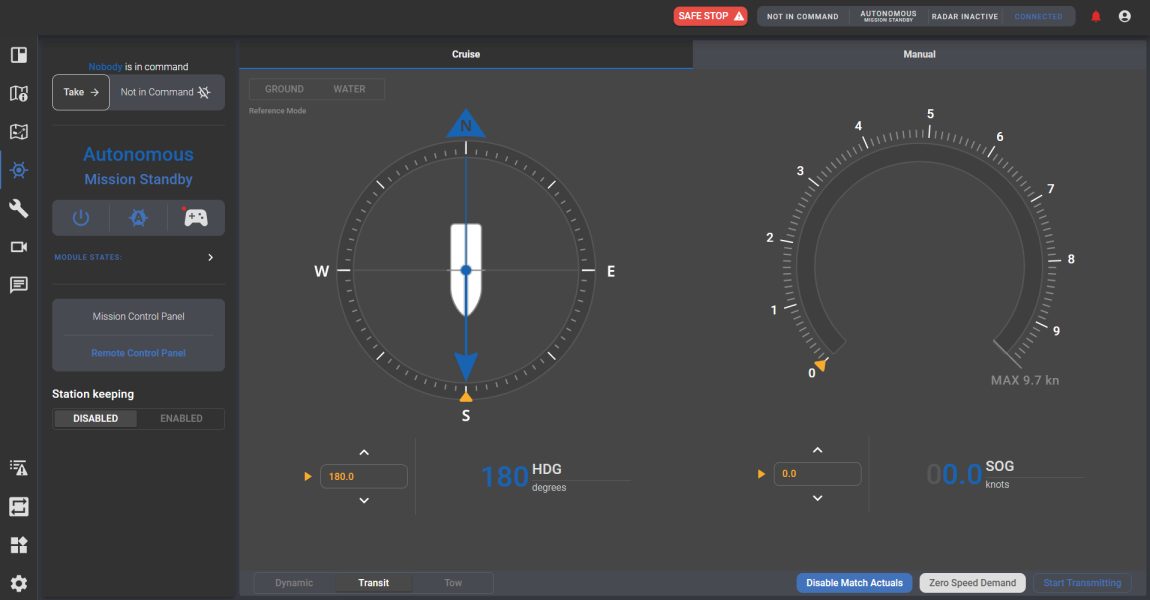
The GuardianAI™ Autonomy is a cutting-edge, modular system designed to give vessels the ability to operate at the highest levels of maritime autonomy, achieving IMO Level 4 or beyond. It can be seamlessly integrated with the sensors and onboard systems of virtually any vessel, enabling fully autonomous voyages, remote-controlled operations, or traditional crewed missions.
The system combines exceptionally detailed situational awareness with intelligent route planning and real-time vessel control. This ensures navigation that is not only safe and efficient but also fully compliant with international collision regulations, giving crews and operators confidence even in complex or congested waters.
In Norway, specialists at Kongsberg Maritime were refining navigation systems that could learn from thousands of hours of real world data. Their engineers spoke of autonomy as a kind of collective memory, a way of helping each vessel benefit from the experience of every other ship on the water. These systems do not replace human judgement but enhance it, offering guidance that is data driven yet deeply grounded in centuries of seamanship.
Across the world technology groups such as ABB, Wärtsilä, Siemens and innovators like Buffalo Automation and Robosys Automation were contributing their expertise to a shared vision. Some built hardware. Others wrote software. Others still worked on the subtle art of integrating these new systems with the traditions of life at sea. Somewhere in this network of minds and hearts a gentle consensus was forming: autonomy should be a companion to human crews, not a replacement for them.
What Autonomous Systems Do
A ship that thinks for itself is not science fiction. It is a network of technology designed to help marine crews make better decisions and react more quickly to their environment. Sensor arrays combine radar, lidar, cameras and sonar into a comprehensive view of the world around the vessel. Artificial intelligence interprets this data and suggests actions that improve safety and efficiency. The system might recommend a slight shift in course to avoid unexpected wakes or decide that slowing by a few knots will reduce fuel use and emissions.
When a ship arrives in port there is often no engine noise at all. Instead there is the soft hum of electric motors guided by precision navigation software. Passengers disembark with delight. Dockworkers remark on how much more predictable the approach feels. Parents smile at children who stand on the railing watching a ship move as smoothly as a feather on water.
These systems are not perfect. They are learning always evolving and always being refined. But that growth is part of the human story. Every cautious experiment and every successful trial feeds into the next iteration. And that process is what makes this era so alive.
Brands and People Making It Happen
There is no single inventor of this moment. The story is collective. At Avikus, part of Hyundai Heavy Industries Group, engineers have worked on intelligent navigation systems that enable vessels to manage propulsion and steering more smartly. A lead systems architect said once that working on autonomy felt like sculpting a ship’s intuition.
Wärtsilä SmartDock systems help vessels approach berths with a level of coordination and smoothness that once belonged only in dreams. Crew members speak of these systems as trusted guides that reduce stress during complicated manoeuvres.
ABB’s Ability Marine Pilot Vision and related software help captains see through fog and at night with clarity and confidence. An ABB marine specialist who had spent years refining the interface told a reporter that people often forget the value of simplicity. They did not want to overwhelm crews with data but to offer a kind of quiet counsel when it was most needed.
Startups like Buffalo Automation with their AutoMate system have brought neural network‑based perception to smaller vessels, enabling them to recognise and classify objects in real time with remarkable accuracy. Their founder once described an early trial where her own family yacht navigated a busy channel under semi autonomous control and returned to dock without a single manual correction. Her brother joked that she had finally given the boat a mind of its own and a taste for adventure.
Companies like Robosys Automation and SEA.AI are focused on integrating autonomy into vessels of all sizes including private yachts and workboats, and they speak often of a future where captains and crews carry less burden and more peace of mind.
The First Yachts of Autonomy
While cargo and research vessels have led the early wave of adoption, the world of private yachting is beginning to embrace autonomy too. In 2025 design studios and shipyards in Italy France and the Netherlands are quietly working on vessels that will incorporate autonomous navigation as a headline feature. Brands like Feadship, Oceanco and Sanlorenzo have flagged interest in offering smart navigation packages that ease long ocean passages and improve safety in crowded marinas.
A future trend is already visible in smaller superyachts and explorer yachts where hybrid systems combine electric propulsion with autonomous guidance. The owners of these vessels often speak not of novelty but of reassurance. One owner in the Mediterranean remarked that crossing the sea at night with a twin crew of human and artificial intelligence felt like having a wise old friend alongside a youngster eager to learn.
The Financial Horizon
Investors are taking note. What once seemed like a niche experiment is now a burgeoning market. Maritime analysts estimate that autonomous and smart navigation systems could constitute a multibillion dollar industry by 2030, touching all segments from commercial shipping to private yachting. Savings come from improved fuel efficiency route optimisation and reduced crew fatigue. Ports save on accident risk and insurance costs fall as incidents decrease.
Early adopters are already seeing the benefits. A regional ferry operator in Northern Europe reported a thirty percent reduction in fuel use in pilot runs with smart routing and automated speed adjustments. That kind of saving quickly adds up when multiplied over hundreds of trips per year.
Consultants in Singapore and Rotterdam speak of autonomous navigation systems as a differentiator for shipping companies that want not only to reduce operating costs but to offer more reliable services. With global supply chains under pressure and fuel costs ever uncertain, autonomy offers a way to respond to both market demands and environmental expectations.
What Comes Next
By the end of the decade these systems will no longer be curiosities but expected features. Ships will continue to be crewed by people with deep love and respect for the sea, but those crews will be supported by intuition‑like intelligence that makes decisions clearer and journeys safer.
Regulatory bodies are moving cautiously toward frameworks that recognise autonomous operation alongside traditional rules of the sea. Classification societies and maritime administrations are working on guidelines that will allow wider commercial use while preserving safety and accountability.
And as autonomous technology spreads, it will touch every part of the maritime world. Research vessels will be able to continue sensitive scientific missions without worrying about human fatigue. Offshore wind support ships will operate with precision in tight seas. Yachts will enter harbours with elegance and whisper quiet confidence.
Takeaway from GrabMyBoat
One old sea captain who once guided freighters across the North Atlantic said that autonomy reminded him of the way seasoned sailors learn to read the sea by feel and sound. Now modern crews would have a new sense. Not one that replaces experience but one that extends it.
A young engineer from Singapore whose family has sailed for generations smiled as she put it this way: We are not building ships that think like humans. We are building ships that think for humans. And in doing that we honour centuries of seamanship while creating room for new stories at sea.
And perhaps that is the most human part of all. Because the sea has always been a place of wonder and risk, challenge and beauty. Autonomous ships do not shrink that wonder. They simply invite us to navigate it with more insight, more care and a sense that tomorrow is wide open on the water.
Sources (APA)
- American Bureau of Shipping. (n.d.). Autonomous vessel notations and guidelines.
- Fugro. (2025). Autonomous offshore survey projects.
- MarineAI. (2025). GuardianAI and maritime autonomy systems.
- Maritime Autonomous Surface Ships. (2025). IMO guidelines on autonomous shipping.
- Robosys Automation. (2025). VOYAGER AI autonomous navigation suite.
- Wärtsilä. (2025). SmartDock autonomous docking solutions.