
Lürssen: Legends of the Sea – A 150 Year Journey
It was the spring of 1875, and the air over the Weser River in Bremen carried the faint tang of salt from the nearby North Sea. In a small workshop at the riverbank, Friedrich Lürssen, a man of twenty-four, was surrounded by planks of oak, copper rivets, and the scent of freshly cut timber. To most people it was just another boatyard, but to Friedrich it was a canvas. He was not merely building boats; he was sketching dreams in wood and steel, shaping vessels that would glide, race, and endure.
One day, a man named Gottlieb Daimler came to Friedrich with a strange request. Daimler had just invented a new engine, a contraption that puffed smoke and churned metal, and he wanted it tested on water. Friedrich, ever curious, accepted the challenge. The result was REMS, the world’s first motorboat.
Measuring just six metres, it was a modest craft but it carried within it a spark that would ignite a legacy. When REMS first slid into the river, locals gathered on the banks, unsure whether to cheer or run away. This small motorboat signalled the start of a revolution in boating, and it was built by a man who believed the impossible was merely an invitation.

The Age of Speed
Friedrich’s son Otto inherited not only the workshop but a restless hunger for speed. Otto’s creations were daring, elegant, and often terrifying to spectators. Boats like DONNERWETTER skimmed across the Weser with a grace that seemed almost unnatural. Crowds would gather on riverbanks, children perched on shoulders, and women holding parasols, all mesmerised by the sleek hulls cutting through the water. Local newspapers called them marvels of German engineering. People whispered that Otto and his family had a kind of magic, the ability to coax metal and timber into movement that was almost alive.
The workshop became a laboratory of invention. In 1927, OHEKA II appeared on the scene, fitted with three Maybach engines. It was faster than any commuter yacht of the time and became the pride of the river. Locals would follow its journey, watching as it raced along the water, leaving a trail of foam and admiration. It was in these years that the Lürssen name became synonymous not only with craftsmanship but with daring and imagination. When Otto passed away unexpectedly, his wife Frieda took the helm. She was a quiet force, blending determination and intuition, and under her guidance the yard thrived, proving that vision and courage could transcend circumstance.
The Move to Luxury
The decades rolled on, wars reshaped Europe, and the world of boating changed. Engines became more powerful, steel replaced much of the timber, and yachts grew larger. By the 1980s, Lürssen sensed a new horizon. The world was no longer just about speed and efficiency. Ultra-wealthy clients, princes, billionaires, and global magnates desired yachts that were personal sanctuaries, floating palaces that could traverse oceans with grace. Lürssen responded with a new division focused solely on luxury yachts.
The first projects were more than commissions; they were conversations. Owners arrived with visions, sketches, and dreams. The shipyard listened, advised, and transformed those ideas into reality. Each yacht became a living expression of personality, a blend of engineering prowess and artistic intuition.
Titans of the Sea
Among Lürssen’s creations, some have become legends. Azzam, launched in 2013, is the longest private yacht in the world, stretching 180.65 metres. Imagine walking across a deck so vast it could fit a football pitch, yet the yacht glides through water with the agility of a dancer. The building process was a ballet in itself, with hundreds of craftsmen, engineers, and designers working in concert to ensure every detail, from hull balance to silk curtains, was perfect. The anonymous billionaire owner had a vision of unrivalled scale and speed, and Lürssen brought it to life. The yacht was completed in under three years, a record for a vessel of such magnitude.
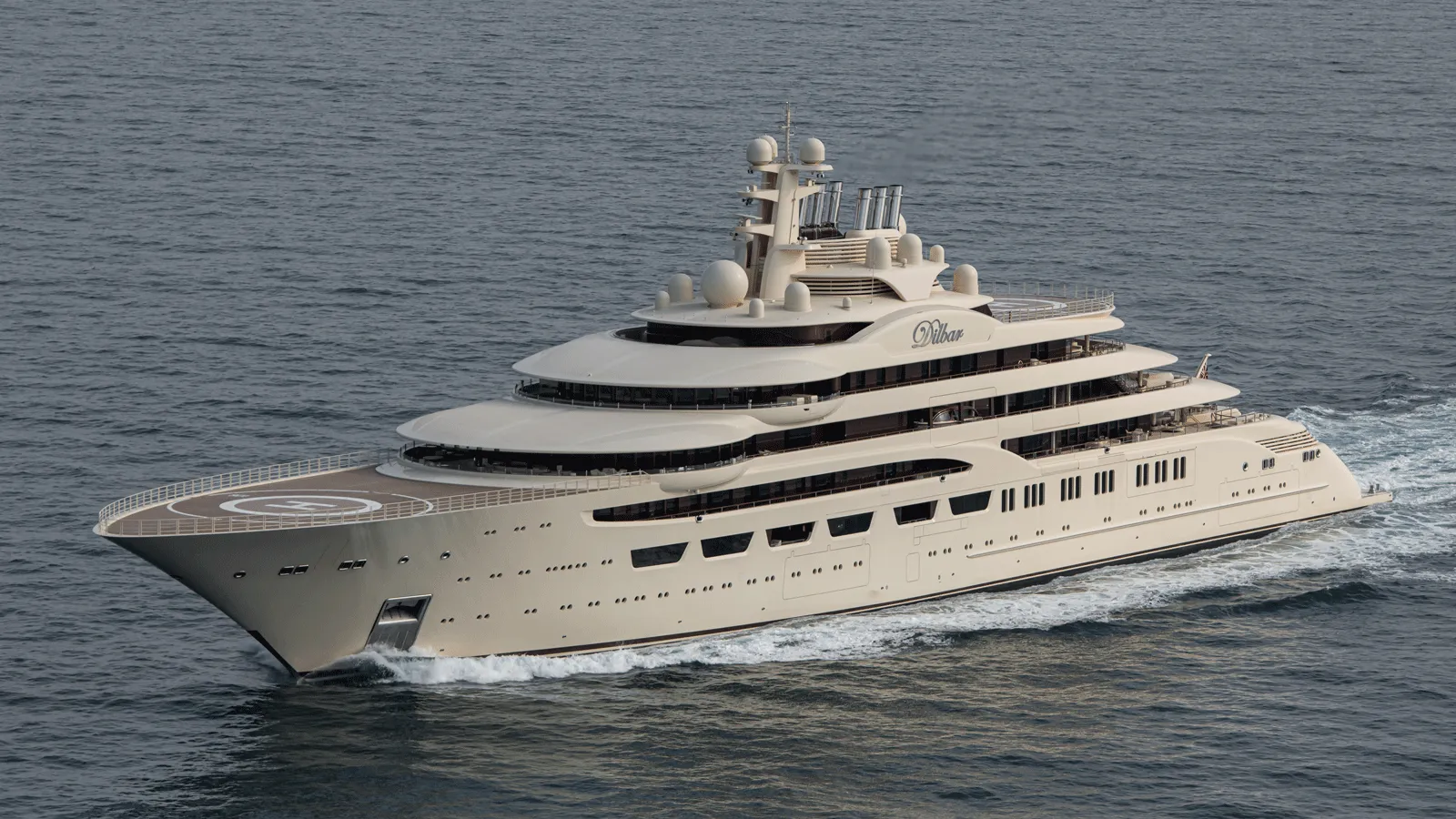
Then came Dilbar, delivered in 2016, a vessel remarkable not for its speed but for its sheer volume. At 15,917 gross tonnes, it was the largest private yacht by tonnage in the world. Inside, it housed pools, lounges, and leisure spaces rivaling luxury hotels. The yacht’s value is estimated at over six hundred million dollars, and its annual maintenance costs approach tens of millions. Yet for the owner, Dilbar was not merely a possession; it was a dream realised, a statement to the world that artistry and engineering could coexist on a scale previously unimaginable.
Lady Lara, built in 2015, and Al Lusail, completed in 2017, continued the tradition of bespoke opulence. Lady Lara offered a helipad, spa, and beach club, reflecting Alexander Mashkevitch’s desire for comfort and elegance. Al Lusail, for Sheikh Tamim bin Hamad Al Thani, was a 123-metre embodiment of luxury and technology, seamlessly blending spaces for entertainment, relaxation, and privacy.
Then there is Whisper, formerly Kismet, owned by Eric Schmidt, a former Google CEO. Measuring 95 metres, it embodies playful sophistication, with Jacuzzis, gyms, and movie theatres, a yacht where technology and leisure meet in perfect harmony. Each vessel tells a story of its owner’s vision, yet also of the craftsmen whose hands shaped the steel and wood into living art.
Innovation as Tradition
Innovation has always been Lürssen’s lifeblood. From REMS to Azzam, the yard has been a pioneer. It introduced hybrid propulsion systems, underwater exhausts, pod drives, and advanced wastewater treatment. Decks are now made from sustainable materials that reduce the need for tropical teak. Recently, Lürssen has embarked on the ambitious journey of integrating methanol-powered fuel cells into megayachts, a move that could allow vessels to operate for days without emissions, redefining sustainable luxury at sea.
The story of each yacht is also a story of human ingenuity. Craftsmen recall testing engines that roared like beasts, coordinating thousands of systems, fitting furniture that must withstand ocean swells, and ensuring the tiniest detail is perfect. The process can take three to four years for the largest yachts, each day a mixture of precision, passion, and patience.
Tales from the Yard
There are tales that have become legend among Lürssen workers. One recounts the Weser River in the early 1900s, where a tiny speedboat raced a small sailboat. The crowd watched, holding their breath, as the engine-powered vessel darted past like lightning. Another story recalls the building of Azzam, where teams of engineers coordinated hundreds of components with surgical precision, ensuring a yacht longer than half a football field could move gracefully and safely through the water. Each story is a testament to dedication, creativity, and the human spirit that breathes life into steel and timber.
The Heartbeat of Yachting
Lürssen’s contribution to yachting extends beyond size, luxury, and technical achievement. It has shaped what it means to dream on water. Owners become part of a living legacy, connected to a lineage of visionaries who have pushed the boundaries of possibility. The yachts themselves become cultural icons, seen cruising the Mediterranean or anchored in the Caribbean, admired not only for their scale but for the artistry, precision, and daring that built them.
Walking along the Weser today, one can sense the echoes of history. From REMS to Dilbar, from small river trials to launches of record-breaking vessels, the spirit of Lürssen endures. It is a testament to the belief that boats are more than tools. They are expressions of human imagination, ambition, and beauty.
Looking to the Horizon
Now, in its one hundred and fiftieth year, Lürssen continues to blend tradition with innovation. The vision is audacious: yachts powered by methanol fuel cells, vessels that minimise environmental impact, and spaces that rival the finest residences on land. Yet the essence remains unchanged. Lürssen is a storyteller, a dream-weaver, a place where steel, timber, and imagination collide to create something extraordinary.
Every yacht tells a story, every launch is a celebration, and every voyage whispers the legacy of craftsmanship and courage that began on the banks of the Weser. Lürssen is not simply a shipyard. It is a testament to what can be achieved when vision meets skill, when human ingenuity dares to touch the water, and when ambition is given form in wood, steel, and heart.
In the world of luxury yachting, the name Lürssen is synonymous with awe, wonder, and possibility. It reminds us that even in a world where much seems attainable, some creations remain magical, vessels that carry not just people but dreams across oceans. From the first six-metre motorboat to the leviathans of the present, Lürssen continues to write stories on the water, inviting us all to imagine what is possible.

