
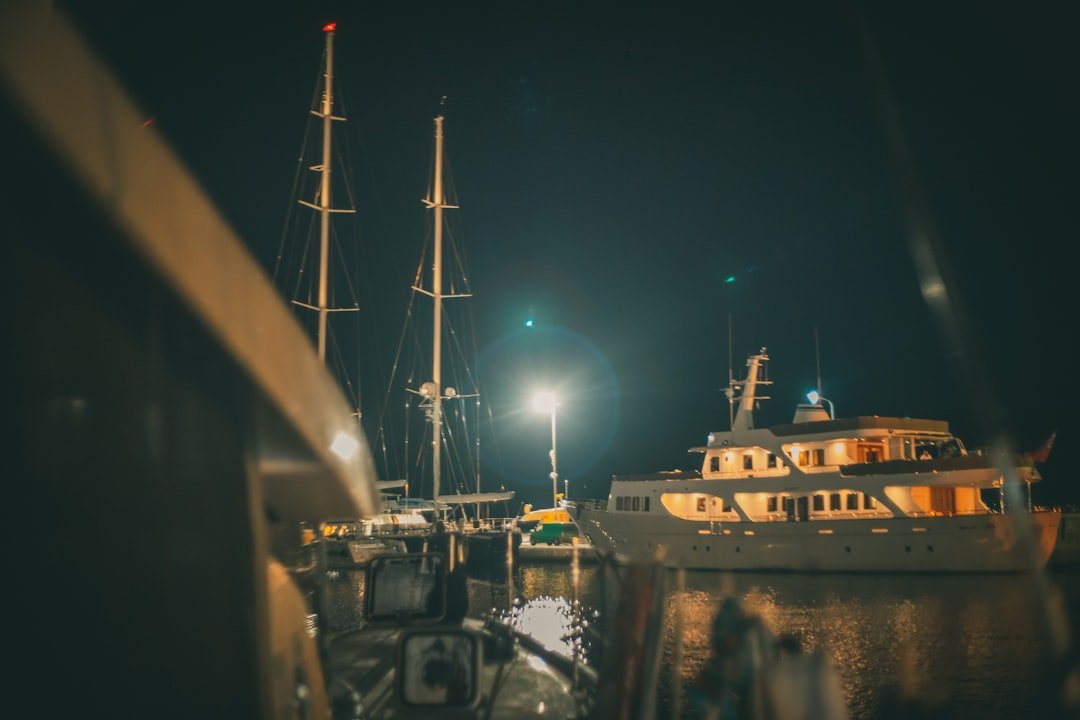
Night Vision Is Becoming A More Useful Yacht Upgrade
A yacht arriving at an anchorage after sunset operates in a very different visual environment from one entering during daylight. Navigation instruments can show charted hazards and AIS can identify equipped vessels, although neither tells the captain that an unlit tender, swimmer, floating object or small fishing boat is directly ahead.
Thermal and low-light camera systems have improved enough to fill more of that gap, which is why night vision is moving beyond specialist military or commercial use into the equipment considered on larger leisure yachts.
The systems work differently. Low-light cameras amplify available light and can produce a relatively natural view when moonlight or harbour lighting exists, while thermal cameras detect differences in heat and can reveal people, engines and vessels in darkness.
Neither turns night into perfect daylight, and owners should be wary of equipment demonstrations that imply otherwise.
The Best Use Is Another Layer Of Information
Marine navigation already depends on several overlapping sources. Radar can detect objects at distance, AIS identifies vessels transmitting their position and electronic charts provide information about known geography.
A thermal camera contributes visual confirmation. If radar shows a small target ahead, the watchkeeper may be able to identify whether it is another boat rather than relying solely on the electronic return.
The system becomes particularly useful around anchorages where small tenders and local boats may lack AIS. Warm human bodies can also stand out clearly against cooler water, which has obvious value during a man-overboard search at night.
Installation Determines How Useful It Becomes
Camera specification attracts attention because buyers can compare resolution, range and zoom. Positioning matters just as much.
A camera mounted too low can lose visibility in spray and waves, while one placed behind hot exhaust equipment may compromise thermal performance. Stabilisation becomes important on a moving yacht because a powerful zoom provides little value when the image shakes too much to interpret.
Integration with the bridge also deserves consideration. A system that requires the captain to look away from primary navigation displays may add cognitive load precisely when attention is already stretched.
Modern installations can place camera feeds alongside radar and chart information or allow operators to direct cameras towards selected targets.
Owners Should Understand The Limits
Thermal imaging detects heat differences rather than identifying every physical obstacle. A partially submerged object close to the temperature of the surrounding water may remain difficult to see, while heavy rain, fog and certain atmospheric conditions can reduce performance.
Low-light cameras depend on some available light and can struggle with glare from bright sources.
Radar consequently remains essential. Night vision supplements established navigation equipment rather than providing a reason to replace it.
Crew training is equally important because interpreting a thermal image takes practice. Objects appear differently from ordinary vision, and somebody seeing the system for the first time during a difficult night approach will gain less from it than a watchkeeper who uses it routinely.
Security Adds A Second Use
Owners can also use thermal cameras while anchored because the system can identify approaching tenders or movement around the yacht in darkness.
That function is becoming more relevant as yachts carry valuable equipment and spend long periods in crowded anchorages. Crew can monitor the surrounding water without illuminating the entire vessel or relying only on conventional CCTV.
Privacy requires sensible handling in marinas and populated coastal areas, particularly when powerful cameras can observe considerable distances.
The Upgrade Needs To Match The Yacht
A iate that rarely moves after dark and spends most nights inside well-lit marinas may gain relatively little from an expensive integrated system. An owner who cruises remote coastlines, makes overnight passages or anchors frequently has a stronger case.
The decision should begin with how the yacht operates rather than how impressive the technology looks on a bridge specification.
Navigation has always relied on combining imperfect information. Better night vision adds another useful set of eyes, particularly in the part of the marine environment where radar, AIS and charts can tell the crew a great deal without showing them exactly what is floating in front of the bow.

