
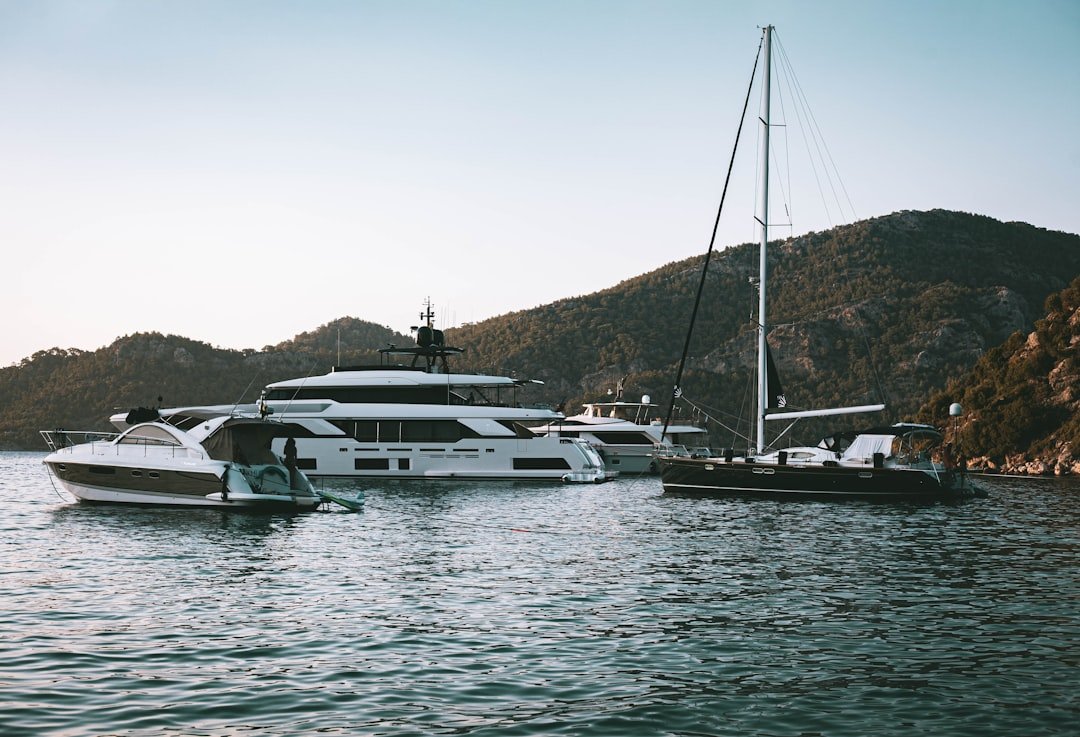
Motor Yacht, Sailing Yacht Or Catamaran?
Choosing between a motor yacht, a sailing yacht and a catamaran is not really a question of taste. It is a question of how you want the holiday to work once you are on board.
The same coastline can feel completely different depending on the yacht. On a motor yacht, the day can move quickly: breakfast in one bay, lunch near a beach club, sunset in another port. On a sailing yacht, the journey itself becomes part of the pleasure: the wind, the movement, the slower rhythm, the sense that you are travelling with the sea rather than simply across it. On a catamaran, the appeal is often practical: space, stability, easy swimming and a more relaxed setting for families or groups.
This is why guests should not choose only from photographs. A yacht can look spectacular online and still be wrong for the group. The better question is not “Which one is the most impressive?” but “Which one will make the week easier, more comfortable and more enjoyable?”
Choose A Motor Yacht If You Want Speed, Service And A Polished Experience
A motor yacht is usually the right choice for guests who want comfort, pace and a more luxury-led charter experience. It is the yacht for people who want to cover more distance in less time, arrive with a certain sense of occasion and enjoy the water without necessarily being interested in sailing itself.
This matters in destinations where guests want to see several places in one week. On the French Riviera, a motor yacht can make it easier to move between Monaco, Saint-Jean-Cap-Ferrat, Cannes and Saint-Tropez. In the Balearics, it can help a group combine Mallorca, Ibiza and Formentera with less time spent in transit. Around the Amalfi Coast, it can support a more flexible route between Capri, Positano, Ischia and quieter anchorages.
The experience is often more polished because motor yachts are commonly designed around hospitality. Depending on size and charter level, they may offer generous sun decks, shaded dining areas, air-conditioned interiors, beach clubs, stabilisers, water toys and a larger professional crew. Guests who want lunch prepared on board, towels ready after a swim, a tender to shore and a captain managing the rhythm of the day will often find a motor yacht the most natural fit.
The trade-off is cost. Motor yachts generally consume more fuel than sailing yachts or catamarans, especially if guests want to travel fast or cover long distances. Fuel is one of the most important variables in charter pricing, and a high-speed itinerary can change the final budget quickly. Motor yachts also tend to come with higher crew, maintenance and berthing costs, particularly in premium Mediterranean destinations.
A motor yacht is best for guests who want the sea to feel effortless. It is less about learning the ropes and more about privacy, comfort, service and access.
When A Motor Yacht Works Best
A motor yacht works especially well for guests who want to do more in less time. If the group wants to sleep in one place, lunch somewhere else and arrive in a glamorous port before dinner, speed becomes useful rather than decorative.
It is also a strong choice for celebrations, corporate hosting, luxury family trips and guests who may not be confident at sea. Many modern motor yachts have stabilisation systems that reduce roll, making the experience more comfortable at anchor or underway. For people who worry about movement, this can matter more than the look of the yacht.
Motor yachts are also useful when the itinerary depends on precision. If guests have restaurant bookings, event tickets, airport transfers or limited time, the ability to move efficiently can make the charter feel smoother.
The mistake is choosing a motor yacht only because it looks more prestigious. If the group wants quiet anchorages, long swims, simple meals and a slower connection to the landscape, a sailing yacht or catamaran may create a better holiday for less money.
Choose A Sailing Yacht If You Want Atmosphere, Romance And The Feeling Of Real Sailing
A sailing yacht offers a very different kind of luxury. It is usually quieter, slower and more connected to the elements. For many guests, the attraction is not only where the yacht goes, but how it gets there.
The appeal is emotional as much as practical. A sailing yacht gives the sound of wind in the sails, the angle of the boat under way, the sense of participating in an older and more elegant form of travel. It can feel romantic, cinematic and more intimate than a motor yacht. For guests who love the idea of being at sea rather than simply arriving by sea, this is often the most rewarding option.
Sailing yachts also tend to suit routes where the journey is part of the day. In Greece, Croatia, Turkey, the British Virgin Islands or the Grenadines, a sailing yacht can turn short passages between islands into a central part of the experience. The day does not need to be rushed. Guests can swim, read, help with the sails if invited, and let the route unfold more slowly.
There is also a sustainability and fuel consideration. When conditions allow proper sailing, a sailing yacht can reduce engine use compared with a motor yacht. That does not make every sailing charter automatically low-impact, because generators, tenders, air conditioning and logistics still matter, but the basic experience can be less fuel-intensive than a fast motor yacht itinerary.
The compromise is space and predictability. A monohull sailing yacht is usually narrower than a catamaran and may offer less deck space for lounging, dining and socialising. It also heels when sailing, which experienced sailors may enjoy but first-time guests may find uncomfortable. The itinerary may depend more heavily on wind, and progress can be slower.
A sailing yacht is best for guests who want the journey to matter.
When A Sailing Yacht Works Best
A sailing yacht works beautifully for couples, experienced sailors, small groups and guests who want a more traditional, atmospheric holiday. It is also a good option for people who prefer elegance over spectacle.
For example, a couple chartering around the Greek Islands may enjoy the slower rhythm of sailing between bays, anchoring for lunch and spending evenings in smaller harbours. A group of friends who actively enjoy sailing may prefer a monohull because it feels more authentic and responsive. A family with older children may find it a memorable way to introduce them to seamanship, weather, navigation and the practical beauty of life on board.
However, it is not always the right choice for guests who expect maximum stability, very large cabins, hotel-style service or a packed itinerary. If half the group wants to lounge while one person wants to sail, expectations should be discussed before booking.
A sailing yacht should not be chosen as a cheaper version of a motor yacht. It is a different experience. The guests who love it most are usually those who understand that slower does not mean less luxurious. It simply means the luxury is in the rhythm rather than the speed.
Choose A Catamaran If You Want Space, Stability And Easy Living
A catamaran is often the most practical choice for first-time charter guests, families and groups of friends. Its twin-hull design gives it a wide platform, which usually means more usable living space than a monohull of similar length. Guests often notice this immediately: wider decks, larger lounging areas, more separation between cabins and an easier flow between indoor and outdoor spaces.
Stability is one of the main advantages. Catamarans generally roll less than monohull sailing yachts, which can make them more comfortable for guests who are nervous about movement or seasickness. This is one reason they are so popular in warm-weather charter destinations where the holiday is built around swimming, anchoring, sunbathing and long meals outside. Charter operators and yacht specialists frequently highlight catamarans for their stability, living space and suitability for families or groups.
Catamarans also often have a shallower draft than monohulls, allowing them to anchor closer to beaches or access shallower bays. For families, this can mean shorter tender rides, easier swim stops and a more relaxed day on the water.
In destinations such as the British Virgin Islands, Croatia, Greece, the Bahamas and parts of the Caribbean, this can be a major advantage. A catamaran is well suited to island-hopping, anchoring in bays and spending much of the day outside. It is often less formal than a motor yacht and more comfortable for non-sailors than a traditional sailing yacht.
The trade-off is style and speed. Some guests find catamarans less elegant than monohulls and less glamorous than motor yachts. They can also be slower than motor yachts, especially when guests want to cover long distances quickly. But for many charter groups, the extra space and stability matter far more than a sleek profile.
A catamaran is best for guests who want the boat to feel easy.
When A Catamaran Works Best
A catamaran works especially well for families with children, groups of friends and guests who want to spend a lot of time swimming, eating outside and relaxing at anchor. It is often the most sociable option because the deck and saloon spaces are wide and connected.
Imagine a family charter in the British Virgin Islands. Children can move between shaded seating, cabins and swim platforms more easily than on many monohulls. Parents can sit in the cockpit while still keeping an eye on the water. The group can anchor close to beaches, use paddleboards, swim between stops and avoid the more formal rhythm of a larger motor yacht.
For groups of friends, the cabin layout can also be useful. Catamarans often place cabins in separate hulls, creating more privacy than guests expect. This can make a one-week charter feel more comfortable, especially when several couples are travelling together.
There is also a cost-per-guest argument. A catamaran can offer a lot of usable space relative to its length, which can make it attractive for groups comparing value. Some operators note that catamarans can be efficient for larger groups because they provide more deck space and stability on the same nominal length than many monohulls.
The mistake is assuming a catamaran is only the practical, less stylish option. Modern catamarans have become much more sophisticated, and demand has grown partly because they answer what many charter guests actually want: comfort, space, stability and direct access to the sea.
Motor Yacht Versus Catamaran: The Comfort Question
The comparison between motor yachts and catamarans often comes down to what kind of comfort matters most.
A motor yacht offers speed, stronger service potential and a more traditional luxury image. It is usually better for guests who want a captain and crew to create a polished hospitality experience, particularly on larger yachts. It also works well for groups that want to cover more coastline in less time.
A catamaran offers physical ease. It gives space, stability and a relaxed indoor-outdoor layout. It is usually better for guests who want to anchor, swim, eat outside and feel close to the water without constantly moving between destinations.
Fuel can also be part of the equation. Some yacht specialists estimate that motor catamarans can use significantly less fuel than comparable monohull motor yachts because twin slender hulls create less resistance, although actual consumption depends on design, speed, load and itinerary.
The practical distinction is simple: choose a motor yacht if the holiday is about speed, service and arrival. Choose a catamaran if the holiday is about space, stability and easy days at anchor.
Sailing Yacht Versus Catamaran: The Feeling Of The Sea
The comparison between a sailing yacht and a catamaran is more subtle because both can offer a sailing experience. The difference is in the feeling.
A monohull sailing yacht gives the classic sensation of sailing. It heels, responds to the wind and feels more traditional at the helm. For experienced sailors, that is the pleasure. For guests who want romance, atmosphere and a closer relationship with the elements, a monohull can feel more special.
A catamaran is usually more stable, spacious and forgiving. It does not heel in the same way, which many guests prefer. It gives more room to lounge, easier water access and often a better layout for families or mixed-experience groups.
This is why sailors may prefer the monohull, while first-time charter guests often prefer the catamaran. One offers a more authentic sailing sensation. The other offers a more comfortable holiday platform.
Neither is better in absolute terms. The right answer depends on whether the group wants the sailing itself to be the main event or simply a beautiful way to move between places.
Match The Yacht To The Destination
The destination should shape the choice as much as the group.
In the French Riviera, Amalfi Coast or Ibiza, a motor yacht can make sense because distances, port arrivals, beach clubs and a polished social rhythm often matter. Guests may want speed, tender access and a more glamorous onboard setting.
In Greece, Croatia or Turkey, all three options can work. A motor yacht suits guests who want speed and comfort. A sailing yacht suits those who want atmosphere and a slower route. A catamaran suits families and groups who value space and stability around islands and bays.
In the Caribbean, catamarans are especially popular because the charter style is often relaxed, warm-weather and water-focused. Shallow anchorages, island-hopping and outdoor living all play to the catamaran’s strengths.
For more remote destinations, the choice becomes more technical. Range, storage, seaworthiness, crew expertise and tender capability may matter more than the category itself. An expedition-style motor yacht, a robust sailing yacht or a well-equipped catamaran can all work depending on the route.
The best charter advice usually begins with the destination and the guest profile, not with the yacht brochure.
Think About Your Group Before You Think About The Boat
The group dynamic may be the most important factor of all.
A couple may love the romance of a sailing yacht. A family with young children may be happier on a catamaran. A corporate host may need the service structure of a motor yacht. A group of friends may want a catamaran for space and sociability, unless the priority is a high-speed, luxury itinerary with restaurants and nightlife.
Guests should ask practical questions before choosing:
Who is travelling?
Does anyone get seasick?
Are there children on board?
Does the group want to swim every day?
Is the itinerary ambitious or relaxed?
Will guests eat mostly on board or ashore?
Is privacy between cabins important?
Is speed important?
Does the group want real sailing, or simply time at sea?
These questions are more useful than asking which yacht looks best. A beautiful boat that does not match the group will create friction. A less dramatic but better-matched yacht will feel more luxurious because the day works naturally.
The Simple Rule
Choose a motor yacht if you want speed, service, comfort and a polished luxury experience.
Choose a sailing yacht if you want atmosphere, romance and the feeling of travelling under sail.
Choose a catamaran if you want space, stability and easy living, especially for families or groups.
The best choice is not the most impressive yacht on the page. It is the yacht that supports the holiday you actually want: fast or slow, formal or relaxed, social or private, adventurous or restorative.
A yacht should not dominate the trip. It should make the trip easier. When the boat fits the people, the route and the rhythm of the day, the whole charter feels more natural. That is when the decision has been made well.


