
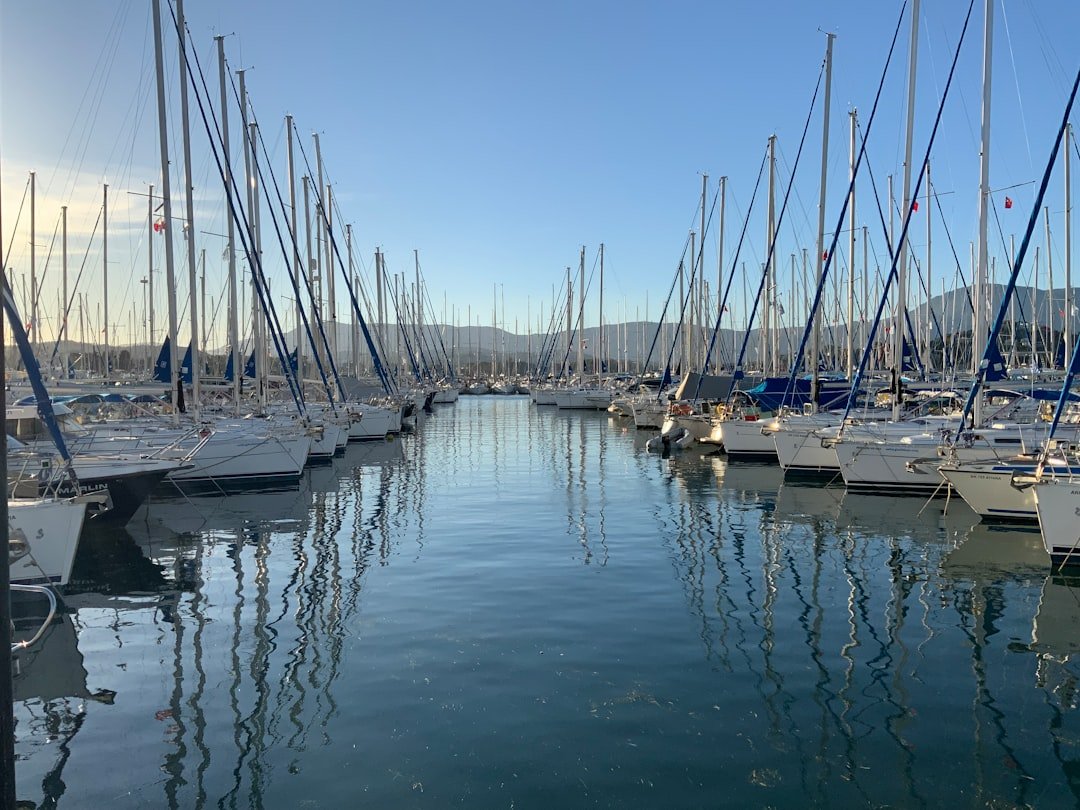
The Marina Is No Longer Just A Place To Park A Boat
A berth in the right harbour has become a scarce asset. In the most attractive coastal and lakeside locations, demand for boats has grown faster than the supply of places to keep them, while planning rules, environmental objections and public-access debates make new marina capacity difficult to create. What used to be treated as operational infrastructure is now drawing the attention of investors for a familiar reason: the land is limited, the customer base is affluent, and the service layer around the berth can be expanded.
The old marina business was comparatively straightforward. Owners needed water depth, security, fuel, power, a technical team and a location close enough to the cruising grounds to make the boat usable. Guests saw the harbour at the beginning and end of a trip. The more attractive commercial model now looks different. The berth remains the anchor product, but the margin increasingly sits around it: maintenance, concierge, restaurants, storage, crew services, events, energy infrastructure, boat clubs, brokerage and waterfront hospitality.
This is not only a matter of nicer restaurants and better lighting on the quay. A marina that removes the practical irritations of boat ownership becomes part of the asset’s value. A marina that fails to do so looks increasingly exposed, especially as vessels become larger, owners become less tolerant of friction, and cities apply more scrutiny to how waterfront land is used.
A Constrained Asset With Better Margins
The investment case begins with scarcity. Waterfront land with the right depth, protection, road access, utilities and planning consent cannot be created easily. In mature boating regions, new marina projects often face local resistance because they compete with public access, residential amenity, environmental protection and tourism management. Existing marinas with strong locations therefore become difficult to replace.
That scarcity would matter less if demand were weak. It is not. Yacht ownership, boat-club models, day boating and premium coastal tourism have all strengthened the commercial case for better-managed waterfront infrastructure. The global marina market is estimated at around 15 billion dollars, and private-capital interest has increased as operators show that a marina can produce recurring income beyond berth rental alone. The sale of D-Marin, one of the best-known marina platforms in the Mediterranean and Middle East, reportedly valued the group at more than one billion euros, reflecting the appeal of scale in a fragmented market.
The larger operators are not buying romantic harbour views. They are buying capacity, client relationships and the ability to standardise services across locations. A marina network can offer owners continuity: similar booking systems, service standards, digital access, maintenance coordination and hospitality partnerships across several cruising regions. That kind of platform logic is familiar from hotels, storage, logistics and private aviation. Boating is now receiving the same treatment.
The Owner Wants Less Administration
The wealthy boat owner is rarely short of options. What he is short of is time and tolerance for avoidable inconvenience. A boat can be a pleasure or a recurring operational problem, and the marina often decides which version the owner experiences.
A well-run marina handles the unglamorous details before they become visible. The berth is secure, the crew can access the vessel easily, fuelling is efficient, technical work is available, provisioning arrives on time, waste is handled properly, guests are received without confusion and the owner does not have to manage small failures from a distance. The best facilities understand that service is not decoration; it is risk reduction.
This is why concierge desks, 24-hour security, covered storage, wash-down areas, technical workshops, crew facilities and better guest reception are becoming commercial features rather than pleasant extras. A marina that makes the boat easier to use increases the probability that the owner will use it more often, keep it there longer and spend more around the site.
The same logic applies to charter guests and boat-club members. The easier the arrival, handover, briefing, boarding and return, the more credible the whole boating experience feels. A marina with poor guest flow can make even an expensive boat feel badly managed.
Hospitality Has Entered The Harbour
The marina is beginning to borrow from hotel and club economics. Restaurants, terraces, lounges, retail, wellness areas and event spaces give people reasons to stay before or after they go on the water. That matters because the berth is used intermittently, while the waterfront can generate activity throughout the day.
There is a risk here. Too much lifestyle packaging can turn a working marina into a waterfront mall with boats as scenery. Serious owners still care first about access, protection, maintenance and competence. A good restaurant will not compensate for weak security, poor technical support or chaotic berth management. The more successful model keeps the marine function intact and adds hospitality around it without allowing the hospitality to overwhelm the harbour.
The best comparison may not be the hotel lobby but the private airport terminal. The client expects comfort, but the core value is efficiency, discretion and control. A marina that receives guests well, protects privacy, coordinates services and keeps the vessel ready has moved beyond simple storage. It has become a service platform.
Switzerland Shows The Smaller, Stricter Version
Switzerland is not a superyacht market in the Mediterranean sense, but it is useful for understanding the cultural and regulatory pressure around marinas. Swiss lakes are intensely used spaces. Lake Geneva, Lake Zurich, Lake Lucerne, Lake Lugano and Lake Constance are not remote leisure zones; they sit beside cities, homes, hotels, ferry routes, swimming areas and public promenades.
That proximity changes what a marina can be. It cannot behave like a closed industrial asset, but it also cannot become pure public space if it is to serve boat owners properly. The balance is more delicate than on a remote coast. Service, order, environmental discipline and visual restraint matter because the harbour is part of a wider civic landscape.
Switzerland also has a strong club tradition. The Société Nautique de Genève, with more than 3,800 members and a history connected to Olympic sailing and the America’s Cup through Alinghi, shows how boating infrastructure can carry social prestige without needing the scale or spectacle of Monaco. On Swiss lakes, the club, the harbour and the setting often matter as much as the boat itself.
For marina operators, that is a useful lesson. The future is not only larger berths and better restaurants. In high-standard markets, credibility comes from fitting the site to its surroundings: controlled but not hostile, premium but not vulgar, technically competent but not visually intrusive.
Energy Infrastructure Will Divide The Market
The next commercial test will be energy. Electric day boats, hybrid yachts, shore-power requirements and pressure to reduce generator use in ports are changing what marina infrastructure needs to provide. Charging points, grid capacity, smart metering and reliable shore power will become part of the competitive offer, particularly in destinations where regulation and public scrutiny are increasing.
This will not be cheap. Upgrading waterfront electrical systems requires capital, planning permission, coordination with utilities and a clear view of future demand. Smaller marinas may struggle if they lack the balance sheet or ownership structure to invest. Larger operators can treat energy as a differentiator, especially where they control several sites and can spread technology and procurement decisions across a network.
Owners may not care about the technical details, but they will care whether the berth works. A yacht that cannot connect properly, charge reliably or reduce generator use in a sensitive harbour will become harder to justify in certain locations. Marinas that solve this early will look more modern than those that treat electrification as a distant issue.
Climate Risk Is No Longer A Footnote
Marinas sit exactly where climate risk becomes physical. Storm surges, flooding, heat, drought, erosion and changing weather patterns affect insurance, maintenance, breakwaters, pontoons, drainage, fire safety and long-term asset value. The best waterfront locations are often the most exposed, and the commercial attraction of a site has to be weighed against its resilience.
This gives older marinas a difficult choice. Some will need expensive upgrades to remain viable. Others may have strong locations but weak protection. Newer projects must show that they can survive both environmental scrutiny and physical climate risk. The marina owner is no longer only managing boats and clients; he is managing infrastructure on an increasingly complicated edge between land and water.
For investors, this makes due diligence more demanding. A marina with full occupancy can still be a poor long-term asset if adaptation costs are underestimated. Conversely, a well-protected marina with planning rights, upgrade potential and strong local demand may become increasingly valuable as new supply remains constrained.
Boat Clubs Change The Customer Base
Ownership is no longer the only route into boating. Boat clubs, membership models, shared access and rentals are bringing new users into marinas, including families and younger professionals who want access to the water without maintenance obligations. That changes the role of the marina because the site becomes the interface between the customer and the boat.
A traditional owner may know how to move through a marina without guidance. A first-time club member does not. They need clear arrival points, staff communication, safety briefings, digital booking, simple returns and a setting that feels controlled rather than intimidating. A marina serving this audience has to think more like a hospitality operator while still meeting marine standards.
The commercial upside is obvious. A berth used by a private owner may sit idle much of the time. A club fleet can generate repeated customer interactions, lessons, events, food and beverage revenue, retail opportunities and membership loyalty. For operators, shared-access models can turn the marina from a passive berthing asset into a more active leisure business.
The Harbour Has Become A Social Asset
Boating has always had a social dimension, but the harbour is increasingly where that social value is organised. Regattas, sailing schools, owner dinners, brand events, boat launches, children’s courses and informal member gatherings all turn the marina into more than infrastructure. It becomes a place where a community forms around access to the water.
This gives marinas a wider destination role. A strong marina can support restaurants, technical jobs, tourism, local events and waterfront regeneration. It can also create tension if residents see the harbour as privatised space, or if development blocks access to the water. The more ambitious the project, the more it needs a civic argument as well as a commercial one.
That argument cannot be built on luxury language alone. Cities and communities will ask what the marina contributes: public access, employment, environmental standards, sailing education, waterfront improvement, climate resilience, tourism quality. The projects that answer those questions convincingly will find it easier to defend their place.
The Next Marina Will Be Curated
The strongest marinas will not necessarily be the largest. Some of the most valuable sites will remain small because the coastline, lakefront or historic town around them cannot absorb more capacity. In those places, the question becomes curation.
Which boats fit the site? Which services are essential? How are crew treated? How does the restaurant relate to the harbour? Can owners arrive discreetly? Are guests received properly? Does the site have proper maintenance and storage? Is the energy infrastructure future-proof? Does the marina have an identity, or is it simply a row of berths with a logo?
These details determine pricing power. Owners will pay for a berth in the right place, but they will pay more for a berth that reduces friction and improves use. Charter guests and boat-club members will return to places where the experience begins smoothly. Investors will prefer assets where the service layer can grow without damaging the underlying marine function.
A marina with a strong location can survive for a long time. A marina with a strong location and a disciplined operating model becomes much harder to compete with.
The Boat Is No Longer The Whole Business
The boating industry still sells the vessel as the emotional centre of the experience. That will not change. But the value around the vessel is becoming more important: where it is kept, how it is serviced, how guests arrive, how energy is supplied, how crew operate, how the waterfront is managed and whether the harbour itself gives people a reason to stay.
A berth used to be a place to park a boat. In the better marina businesses, it is becoming the entry point into a managed waterfront economy. That economy includes storage, hospitality, maintenance, energy, events, access models, security and community.
The operators that understand this will not treat the marina as background infrastructure. They will treat it as the product that makes boating easier to use, easier to monetise and easier to defend in crowded waterfront locations.
The vessel still takes people out on the water. The marina increasingly decides whether the whole experience feels worth repeating.

