
Why Yacht Interiors Are Starting To Feel More Like Homes
The old yacht interior had a recognisable grammar: gloss, symmetry, pale leather, polished timber, formal dining, a few nautical references and enough shine to remind every guest that the object was expensive. It photographed well, particularly at boat shows, but it often treated life on board as a sequence of staged moments rather than an ordinary day in a very particular environment.
That style has not disappeared, and in some markets it still sells. Yet the more interesting yacht interiors now borrow less from hotel lobbies and more from private houses. They are warmer, quieter, more personal and less anxious to perform. Owners still expect technical perfection, but the rooms are being asked to do something different: support family life, remote work, wellness, long stays on board and a closer relationship with the water.
This is a commercial shift as much as a design one. A yacht is no longer used only as a seasonal object for entertaining. Many owners spend longer periods on board, travel with children or extended family, work from the yacht, host more informally and expect spaces that do not become tiring after three days. An interior built mainly to impress at first sight can fail quickly under those conditions.
The Boat Show Interior Is Losing Authority
A yacht designed for a brochure has different priorities from a yacht designed for a month of use. The brochure wants impact: dramatic lighting, sculptural furniture, large surfaces, a recognisable material palette and a room that can be understood in one image. Daily life is less cooperative. People leave books on tables, children move through spaces wet from swimming, guests take calls, crew need service routes, cabins require storage, and the saloon must work at noon as well as it does during a champagne reception.
Designers are adjusting because owners are asking better questions. Does the dining area feel natural when only four people are eating? Is the main saloon comfortable in strong daylight? Can a child move from the beach club to the cabin without turning the whole yacht into a service problem? Are there places for privacy when several generations are on board? Is the office truly usable, or just a desk added to a layout? Does the interior still feel good after a week at anchor?
The answers have pushed yacht design away from theatrical finish and towards livability. The room still has to meet marine standards, weight limits, fire regulations, vibration constraints and maintenance requirements. It also has to feel less like an exhibition stand.
Residential Designers Have Entered The Yacht
One reason yacht interiors are changing is that more owners are involving designers known for houses, apartments and hospitality projects rather than only traditional marine interiors. This does not mean a yacht can simply be designed like a villa. It cannot. Space, movement, safety and engineering impose a stricter discipline at sea than on land. But residential designers bring a different instinct: they think about how rooms age, how people sit, where objects accumulate, how light changes, how a family moves through a house and why comfort is not the same as softness.
The effect is visible in materials and layout. Interiors are becoming more layered, with woods, stone, linen, wool, leather, plaster-like finishes and textured fabrics replacing some of the colder high-gloss surfaces that dominated earlier yacht design. Outdoor and indoor spaces are being linked more deliberately, with larger openings, continuous flooring, calmer transitions and saloons that feel connected to the aft deck rather than sealed away from it.
This does not make the yacht less sophisticated. It makes the sophistication less dependent on shine.
The Sea Is Now Part Of The Room
For a long time, yacht interiors sometimes behaved as if the sea were outside the design rather than central to it. Heavy window treatments, formal layouts and enclosed lounges created rooms that could almost have been placed in a hotel. The view was present, but not always structurally important.
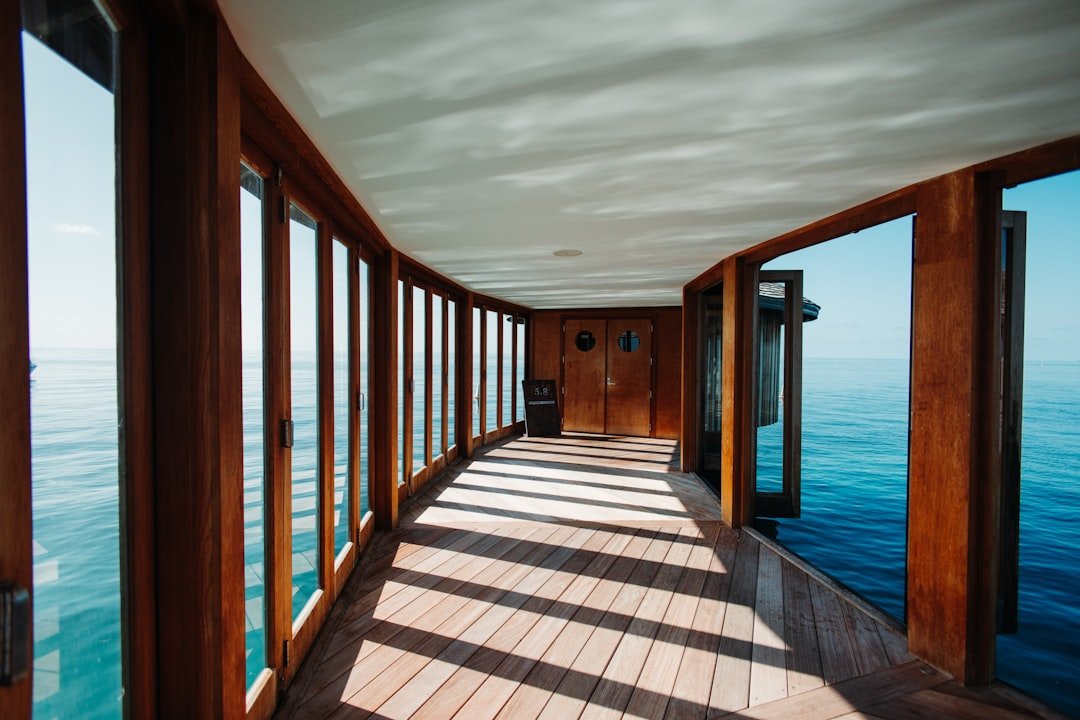
The better modern layouts treat the water as part of the architecture. Larger glazing, open aft decks, fold-down terraces, beach clubs and lower furniture all change the relationship between interior and exterior. Guests do not want to sit in an expensive room and feel cut off from the reason they are on board. They want shade, air, water access and continuity between lunch, swimming, reading and conversation.
This has practical consequences. Fabrics need to withstand sun, salt and heavy use. Floors must cope with wet feet. Furniture needs to be secure without looking bolted down. Air conditioning, acoustic treatment and lighting have to support comfort without making the yacht feel sealed. The residential mood only works when the marine discipline underneath it is strong.
A yacht that feels like a home cannot behave like a fragile one.
Family Use Has Changed The Layout
The superyacht image is often built around adult entertaining, but many private yachts are family assets before they are social stages. Children, grandparents, friends, tutors, security, crew and guests may all be on board at different points in the season. That reality is changing how space is planned.
The formal dining room is less dominant than it once was. Outdoor dining, shaded informal seating, larger aft decks and multipurpose lounges often matter more because they match how people actually spend time on board. Cabins need better storage and more forgiving finishes. Bathrooms are still expected to be highly finished, but they must also be usable after swimming, sun cream and children. Media rooms, bunk cabins, study spaces and flexible guest accommodation increasingly matter because the yacht may be used by different family configurations across the season.
This is especially relevant for owners who are used to high-quality houses. They do not need a yacht that imitates a palace. They need one that handles real life without visible effort.
The Office Has Become Serious
Remote work changed expectations on board. A desk in a cabin is no longer enough for owners who may need to take confidential calls, review documents, join video meetings or manage a business while travelling. The office has become a functional room, not a decorative afterthought.
That means acoustics, privacy, lighting, screen position, secure connectivity, storage and background quality matter. A poorly designed workspace can undermine the point of working from a yacht: the owner is physically away but operationally present. The room must support concentration without making the yacht feel like an office block.
This is where residential and corporate design begin to overlap. The best yacht offices resemble private studies more than business centres. They allow work to happen without contaminating the rest of the day. Once the call ends, the owner should be able to step back into the yacht rather than carry the mood of the office through the saloon.
Wellness Is Moving Into The Floorplan
Wellness on yachts used to be expressed through amenities: a gym, a massage room, perhaps a sauna on larger vessels. Those features still matter, but the more interesting change is spatial. Designers are thinking about sleep, recovery, light, noise, air, movement and the psychological effect of the interior.
A calm cabin is now a performance feature. So is a gym with natural light, a spa area that does not feel squeezed into leftover space, a beach club that allows easy water access, and a shaded deck where guests can spend hours without overheating. Materials are part of this conversation, but so are proportion, silence and the absence of visual clutter.
The yacht interior is therefore becoming less about how much has been added and more about what has been controlled. Light that can be softened. Noise that is reduced. Storage that prevents mess. Surfaces that feel warm without becoming delicate. Guest areas that allow separation without isolation.
For owners who spend intense working lives in cities, that kind of control may be more valuable than another decorative statement.
Sustainability Has Become More Technical
Sustainable yacht interiors are difficult to discuss well because the language is easily abused. A few natural fabrics do not make a yacht sustainable. Nor does a reclaimed table compensate for an inefficient vessel. Still, the interior supply chain is changing, and the direction is not only cosmetic.
Designers are using more responsibly sourced woods, recycled or low-impact materials, natural fibres, plant-based leathers, stone, bamboo, linen and other renewable or lower-impact finishes where they make sense. They are also thinking about durability, repairability and weight, because an interior that dates quickly or requires constant replacement is not especially responsible.
Weight is a marine issue as well as a design issue. Heavy materials affect performance, fuel consumption and engineering decisions. A yacht interior has to balance tactility with technical limits. Solid marble may look convincing in a villa, but at sea the same effect may need to be achieved through lighter construction. The best interiors do not simply import residential materials; they reinterpret them intelligently.
Sustainability becomes credible when it is part of specification, maintenance and longevity rather than a mood board.
Technology Is Better When It Disappears
The connected yacht is no longer a futuristic idea. Owners expect entertainment systems, climate control, lighting scenes, security, connectivity and operational monitoring to work smoothly. The design challenge is that visible technology dates quickly and can make an interior feel like a showroom.
The more refined approach hides the system and keeps the control intuitive. Screens disappear when not needed. Lighting adjusts without theatrical colour effects. Climate systems are quiet. Workspaces support calls without visible clutter. Entertainment is available, but not allowed to dominate every room.
This is another reason yacht interiors are moving closer to homes. In good houses, technology supports the atmosphere rather than advertising itself. The same principle applies at sea, with the additional difficulty that everything must work under marine conditions and often far from easy technical support.
An owner may enjoy innovation, but he does not want to troubleshoot it during dinner.
The Crew Still Determines Whether The Design Works
A yacht interior can look excellent and still fail if it ignores crew movement. Service routes, storage, laundry, galley flow, cabin access, cleaning, waste handling and technical panels are not glamorous topics, but they decide whether the yacht runs smoothly.
Residential comfort on board depends heavily on invisible labour. Towels appear because there is storage and crew access. Lunch feels relaxed because the galley and service path work. Cabins remain orderly because housekeeping has somewhere to operate. A beach club feels effortless because wet items, toys and guests can move through the yacht without creating chaos.
The more informal yacht interiors become, the more important this discipline is. A relaxed atmosphere cannot be an excuse for poor planning. If the crew have to cross guest areas constantly, if storage is insufficient, or if materials are too fragile for real use, the interior becomes a burden disguised as taste.
Owners may talk about design. Crew know whether the design is true.
Refit Culture Is Becoming More Sophisticated
The shift towards residential interiors is not limited to new builds. Refit projects are increasingly important because many yachts built in earlier design languages remain technically valuable but visually dated. Owners may not want a new yacht; they may want the existing asset to feel more aligned with how they now live.
A refit can change materials, lighting, furniture, cabin use, technology, outdoor flow and wellness spaces without replacing the vessel. It can also correct earlier design mistakes: too much gloss, insufficient storage, formal rooms that are rarely used, poor workspaces or guest areas that do not suit family life.
The economics vary widely, and a serious refit is not a decorative exercise. Weight, safety certification, systems integration and yard time all matter. But a well-planned interior refit can extend the useful life of a yacht and protect value by making it more attractive to owners, charter guests or future buyers.
The most successful refits do not chase a trend. They remove the parts of the yacht that make it feel older than it is.
Taste Has Become More Personal
Yacht interiors used to carry more shared signals of wealth. A certain gloss, a certain timber, a certain arrangement of saloons and cabins. The newer interiors are more personal, partly because owners are less willing to live inside someone else’s idea of status.
Some want a calm family house at sea. Some want a floating gallery. Some want a wellness retreat. Some want a working residence that can host guests without feeling corporate. Some want the interior to connect with their houses on land, using similar materials or art. Others want the opposite: a yacht that offers a cleaner, lighter version of life away from home.
This creates a more interesting market for designers but also a more demanding one. Personalisation cannot mean adding initials to cushions or choosing unusual stone. It means understanding how the owner lives, how the crew work, how the yacht is used and what the interior should make easier.
Taste is no longer only visible. It is operational.
The New Yacht Interior Has To Age Better
A yacht interior is expensive to build, expensive to maintain and difficult to change casually. That alone makes timelessness more than an aesthetic preference. A room that looks fashionable for two seasons but becomes irritating after repeated use is a poor investment.
The interiors that age well tend to avoid extremes: too much gloss, too much theme, too much trend colour, too much built-in drama. They use durable materials, good proportions, controlled lighting, proper storage and a palette that can absorb personal objects rather than compete with them.
This is where the residential influence is most useful. A good home does not reveal all its value in one image. It becomes convincing through repetition: breakfast, weather, guests, children, work, quiet evenings, and the ordinary disorder of life. A yacht that can handle that without losing its composure will outlast a more theatrical one.
The Yacht Is Becoming A Residence At Sea
The move towards home-like yacht interiors should not be misunderstood as casualisation. Owners are not lowering expectations. They are raising them. A yacht must still look exceptional, meet technical standards, support service, withstand marine conditions and carry the owner’s identity. It must also feel comfortable after the first impression has passed.
That is a harder brief than decorative luxury. It asks the designer to understand not only surface, but behaviour. How people wake, eat, swim, work, rest, host and withdraw. How children move. How crew serve. How sunlight enters. How materials age. How the sea should be framed rather than blocked.
The yacht interior is becoming less like a showroom because the yacht itself is becoming less like an occasional stage. For many owners, it is a seasonal home, a workplace, a family base, a private retreat and a place where public life can be avoided.
A polished room may still impress at the dock. A better one makes the owner want to stay on board longer.

