Is a Hybrid Yacht Worth Buying? What Owners Need to Know Before Making the Switch
A hybrid yacht can reduce generator use, make nights at anchor considerably quieter and allow short periods of low-emission cruising, but the label alone says surprisingly little about what a buyer will experience in practice. One vessel may use a modest battery to support hotel loads, another may travel for limited periods under electric propulsion, while a solar-electric catamaran may be designed around slow, highly efficient cruising. Before paying a premium for any of them, an owner needs to understand exactly what the system powers, how long it can do so and what happens when the batteries are depleted.
This is becoming a more important purchasing decision as builders move beyond experimental installations and begin integrating batteries, electric motors, renewable fuels and more sophisticated energy-management systems into production and custom yachts. Feadship says that more than half of the vessels it launched between 2015 and 2021 incorporated some form of hybrid propulsion, while builders including Sanlorenzo and propulsion specialists such as Volvo Penta are bringing newer systems into the market. At the other end of the spectrum, Silent Yachts has built its range around solar-electric propulsion rather than using electricity as an addition to a conventional diesel yacht.
The attraction is understandable, although the strongest case is not always an environmental one. For many owners, the most immediate benefits are silence, reduced vibration, fewer hours on diesel generators and a more comfortable experience at anchor. Whether those advantages justify the additional cost and complexity depends on how, where and at what speed the yacht will be used.
Hybrid Does Not Describe One Propulsion System
A conventional motor yacht normally relies on diesel engines for propulsion and separate generators for electricity. Even when the yacht is stationary, generators may run for long periods to supply air conditioning, lighting, refrigeration, entertainment systems and other hotel loads.
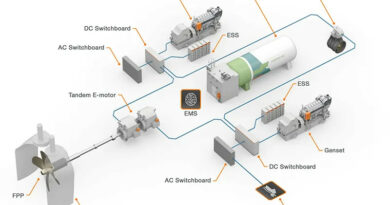
A hybrid yacht introduces electrical storage and, in some cases, electric propulsion into that arrangement. In a parallel hybrid system, the diesel engine and electric motor can both contribute to propulsion. The yacht may operate on diesel at higher speeds, use electric power at low speed and recover or generate electricity under suitable conditions.
In a serial hybrid system, electric motors drive the propellers while generators produce electricity for the motors and battery bank. This can allow the generators to operate closer to their most efficient load rather than forcing large propulsion engines to respond continuously to changing demand. Diesel-electric systems may use a similar architecture without necessarily having enough battery capacity to provide meaningful electric-only operation.
A buyer should therefore never accept “hybrid” as a complete technical description. The useful questions are how large the battery is, which systems it can power, how quickly it can be charged and how long the vessel can cruise or remain at anchor without running an engine or generator.
Some installations are designed primarily to support hotel loads. They can keep the yacht quiet overnight but contribute little to propulsion. Others can provide silent manoeuvring in a marina, low-speed travel through environmentally sensitive areas or several hours of electric cruising. These are materially different capabilities even when both vessels are marketed as hybrid.
The Most Noticeable Benefit May Be Silence
Owners often focus first on fuel consumption, but quieter operation can make the greater difference to life on board. Eliminating or reducing generator use means less mechanical vibration in cabins, fewer exhaust fumes on deck and a calmer environment when swimming, dining or sleeping at anchor.
Batteries can supply the yacht’s hotel systems during periods of lower demand, with the generators operating later to recharge them. On an appropriately designed vessel, this may allow the yacht to remain silent overnight or spend parts of the day at anchor without a generator running continuously.
Electric motors also produce immediate torque and can improve low-speed manoeuvring, although the exact benefit depends on the propulsion configuration. Some systems allow silent departure from a marina or electric cruising at modest speed, creating a noticeably different experience from starting large diesel engines early in the morning.
This is where prospective owners should ask for performance to be described as an operating schedule rather than an abstract technical specification. How long can the air conditioning, galley, stabilisers and entertainment systems run simultaneously on the battery? Can the yacht complete a typical overnight stay at anchor without starting a generator? What battery level will remain in the morning, and how long will recharging take?
The answers will be more useful than a statement about total battery capacity because the vessel’s actual energy demand depends on climate, guest numbers and equipment use.
Speed Changes The Calculation
Electric propulsion is efficient at lower speeds, but the energy required to move a yacht rises sharply as speed increases. This is particularly relevant for motor yachts, where owners may assume that a large battery will provide both silence and conventional high-speed performance.
Silent Yachts illustrates the relationship clearly in its published operating figures for its solar-electric models. The company says its SY62 uses approximately 20kW at five knots, 30kW at six knots and 40kW at seven knots, but around 280kW at its maximum speed of 12 knots. The figures are builder-supplied and will vary with sea state, load and weather, yet they demonstrate why electric range cannot be separated from cruising speed.
A solar-electric yacht may be able to travel significant daily distances at an economical pace when conditions are favourable, but it will draw down its batteries much faster at higher speed. A diesel-electric superyacht may offer greater range and performance, but it will continue to depend on generators and liquid fuel for longer passages.
A buyer who regularly wants to cover 150 nautical miles in one day has a different requirement from an owner who moves between nearby Mediterranean anchorages at seven knots. Neither pattern is inherently better, but only one may suit a particular hybrid design.
Solar Panels Help, But They Do Not Remove The Energy Budget
Solar panels are especially effective on wide catamarans because the large roof area can accommodate a substantial array. Silent’s 60 Series, for example, lists a 16.8kWp solar installation and estimated daily generation of approximately 100kWh under suitable conditions.
That contribution can support hotel loads, recharge batteries and extend low-speed cruising, but solar generation varies with latitude, season, cloud cover, temperature, shading and panel orientation. Air conditioning, cooking, watermakers and other domestic systems can consume a significant share of the available energy before propulsion is considered.
Solar-electric yachts therefore work best when efficiency shapes the whole vessel. Hull form, displacement, cruising speed, insulation and appliance selection all matter. Adding solar panels to an energy-intensive yacht does not transform it into an electrically self-sufficient vessel.
Owners should ask the shipyard to produce an energy model based on their likely itinerary. A summer season in Greece, a winter in the Caribbean and year-round operation in northern Europe will produce different results. The model should include realistic hotel loads and poor-weather scenarios rather than only the best daily solar output.
Larger Yachts Are Using Batteries In Different Ways
At superyacht level, hybridisation is becoming more ambitious. Feadship’s 84-metre Obsidian uses a diesel-electric hybrid architecture and a substantially larger electrical storage system than the builder’s earlier hybrid Savannah. Its propulsion and steering are provided through electrically driven thrusters rather than conventional shafts and rudders.
Feadship’s 2026 Valor goes further, combining a diesel-electric arrangement, solar generation and a 5.34MWh lithium-ion battery bank. Variable-speed generators feed a DC electrical grid, allowing energy to be distributed between propulsion and hotel systems according to demand.
Sanlorenzo’s 50Steel approaches the problem differently. Its green-methanol fuel-cell system converts methanol into hydrogen and then electricity, supplying up to 100kW for hotel loads while the main engines and conventional generators remain inactive. It does not make the yacht fully methanol-powered, but it demonstrates how alternative energy systems can first be used to reduce the large electrical demand created by onboard services.
These projects should not be read as proof that the industry has settled on one solution. They show that hybrid yachts are becoming energy platforms in which batteries, generators, propulsion motors, fuel cells and renewable fuels can perform different functions.
For a custom-yacht buyer, that flexibility creates opportunity but also increases the importance of integration. The owner is not buying a battery as a separate feature. The yacht’s propulsion, electrical distribution, cooling, ventilation, fire protection, control software and operating procedures must work as one system.
What The Environmental Claim Really Means
A hybrid system does not automatically make a yacht low-carbon. The result depends on the electricity and fuel used to charge it, the vessel’s efficiency, its operating pattern and the emissions associated with building and eventually replacing its batteries.
Charging from shore power can reduce local emissions and generator use, but the carbon benefit depends partly on how the marina’s electricity is produced. A yacht running its diesel generators to recharge the battery remains dependent on fuel, although operating generators efficiently and avoiding prolonged low-load running may still improve the overall result.
Renewable diesel, methanol and fuel cells can reduce emissions further in some configurations, but fuel availability, certification and lifecycle emissions need to be examined carefully. A fuel described as “green” may have very different environmental credentials depending on how it was produced and transported.
Owners should ask the builder for expected fuel consumption and emissions across specific operating profiles rather than a general percentage reduction. The comparison should cover the same yacht, speed, hotel demand and itinerary under conventional and hybrid operation.
Regulation Is Influencing Design, But Not Every Rule Applies Equally
The International Maritime Organization’s 2023 greenhouse-gas strategy calls for international shipping to reach net-zero emissions by or around 2050, with earlier targets for reducing carbon intensity and increasing the use of zero or near-zero-emission energy.
The strategy is helping direct investment across marine technology, although private yachts may not fall under every rule designed for large commercial ships. Local restrictions can be more immediately relevant to an owner. Ports, protected areas and city authorities may impose limits on emissions, noise, anchoring or access, while marinas differ considerably in the shore power they can provide.
A buyer should ask a captain or technical adviser to review the intended cruising area. A yacht that can enter and leave a marina electrically may offer a genuine advantage in some locations, but that benefit should not be assumed without examining local rules and infrastructure.
Calculate The Premium Against How You Will Use It
Hybrid propulsion normally increases the initial cost because it adds batteries, power electronics, electric motors, cooling systems, control software and safety equipment. It may also require additional engineering and classification work.
The return should not be assessed only through fuel savings. Reduced generator hours may lower some maintenance requirements, while quieter operation can create a level of comfort that an owner values even when it does not produce a conventional financial payback. Conversely, batteries eventually degrade and may require expensive replacement, while a more complex system can demand specialist servicing.
Before ordering the yacht, ask for a total-cost model covering at least ten years. It should include:
- the initial hybrid premium;
- projected fuel and shore-power costs;
- generator and engine service intervals;
- expected battery degradation and replacement assumptions;
- warranty terms;
- software and control-system support;
- specialist technician availability;
- insurance implications;
- and the likely effect on resale.
The battery warranty deserves particular attention. Buyers should know whether it guarantees years of service, operating hours, charge cycles or a minimum remaining capacity. They should also understand which operating conditions could invalidate it.
Service Support May Matter More Than The Specification
A technically advanced yacht can become inconvenient if qualified support is available only near the construction yard. The owner should establish who can diagnose the system in the principal cruising regions, which components are proprietary and how quickly replacements can be delivered.
An integrated propulsion package from a large supplier may simplify responsibility because one company supports the system from controls to propeller. Volvo Penta, for example, is preparing to bring its D13 IPS Hybrid yacht propulsion system to market in 2026 as a complete helm-to-propeller platform.
A custom arrangement may offer greater flexibility, but it can create uncertainty over responsibility when the battery supplier, shipyard, propulsion integrator and software provider disagree about the cause of a fault.
The purchase contract should define who guarantees whole-system performance rather than allowing each supplier to warrant only its own component. Remote diagnostics, cybersecurity, software updates and access to operational data should also be agreed before delivery.
Inspect The Battery Installation, Not Just The Interior
Lithium-ion batteries require appropriate monitoring, cooling, ventilation, fire detection and containment. The yacht should be designed and classified for the specific installation rather than treating the battery room as a conventional machinery space.
A buyer’s technical representative should review the battery chemistry, compartment design, protection against water ingress, emergency isolation, fire strategy and procedures for damaged cells. Crew training is equally important because an electrical or battery incident requires a different response from a conventional engine-room problem.
The survey should also examine weight and space. Batteries are heavy, and a larger bank may reduce room available for accommodation, storage or fuel. The owner should understand what has been sacrificed to achieve the advertised electric capability.
Test The Yacht In The Way You Intend To Use It
A conventional sea trial focused on maximum speed and manoeuvring is not enough. A hybrid yacht should be tested through a realistic energy cycle.
Run the hotel systems at a normal guest load, spend time under electric propulsion, observe the transition between operating modes and measure the noise in relevant cabins. Check how quickly the batteries discharge and recharge, then repeat the exercise with air conditioning, stabilisers, galley equipment and watermakers running.
The captain and engineer should be able to interpret the energy-management system without relying continuously on shipyard technicians. Controls should be understandable, and the yacht should fail safely if a sensor, inverter or battery module becomes unavailable.
The buyer should also request independently verified figures where possible. Builder estimates are useful for comparison, but real-world performance depends on displacement, fouling, sea state, climate and owner behaviour.
Choose The Yacht Around The Cruising Profile
A hybrid yacht is most compelling for an owner who spends long periods at anchor, values silence, cruises predominantly at moderate speed and can recharge from suitable shore power. Solar-electric catamarans can be especially attractive to owners comfortable with efficient passage-making and a cruising style organised around available energy rather than maximum speed.
A more conventional hybrid motor yacht may suit someone who wants familiar diesel range with quieter hotel operation and limited electric manoeuvring. A large custom yacht can use batteries to manage peak demand, improve generator efficiency and provide silent periods without attempting to cross oceans under electric power.
The wrong purchase is one made around the word “hybrid” rather than the owner’s itinerary. A system that performs beautifully during slow Mediterranean cruising may offer little advantage to someone who routinely makes fast transfers. A large battery may be wasted if the yacht spends most nights connected to reliable shore power, while a small battery may disappoint an owner expecting silent air conditioning throughout a tropical night.
Hybrid technology is becoming a serious part of yacht design, but it has not removed the traditional disciplines of ownership. The best yacht remains the one whose hull, machinery, service network and operating costs fit the way it will actually be used. The difference is that buyers must now assess energy management with the same care they once reserved for engines, range and interior volume.