
The Yacht Club Has To Earn Its Place Again
A yacht club occupies land that almost every coastal or lakeside city now treats as politically sensitive. It sits on the edge of public water, often with private access, long leases, berths, parking, restaurants, junior programmes, racing calendars and a membership structure that may have been designed for a very different generation. For decades, that position was protected by tradition. Today it needs a better argument.
The pressure does not come from one side. Cities want more open waterfronts. Younger boaters want access without buying a boat. Families want clubs that work around children rather than around committee habits. Women expect authority on the water, not only a place in the social calendar. Environmental standards have become harder to treat as decorative. Commercial boat clubs have learned to sell simplicity where traditional clubs sometimes still sell belonging through opacity.
The serious yacht club is therefore not disappearing. It is being forced to become clearer about what it is for. The strongest clubs will not be the ones that erase their history, but the ones that turn history into a working institution rather than a social filter.
The Waterfront Is No Longer Neutral
A yacht club’s most valuable asset is not always its fleet, clubhouse or trophy cabinet. It is the strip of waterfront it occupies.
That creates a new vulnerability. Waterfront land has become too valuable, too visible and too contested to be defended by custom alone. Residents want promenades, swimming areas, restaurants, ferry links, climate protection and public access. Cities want waterfronts that contribute to tourism, quality of life and tax value. Environmental groups watch how shorelines are managed. In that context, a club that looks closed, male, ageing or socially inaccessible can quickly become difficult to defend.
This does not mean yacht clubs should become public parks. The water needs institutions that teach seamanship, manage racing, maintain safety culture, train children, organise volunteers and preserve local knowledge. A city that loses those institutions loses more than a few private dining rooms. It loses competence.
The problem is that competence has to be visible. A club cannot assume the public understands why it deserves its place. It has to show it through junior sailing, training, environmental work, rescue support, accessible entry routes, regattas, local partnerships and a clubhouse that does not behave as if the waterfront belongs only to the members behind the gate.
The Membership Model Is Under Strain
Traditional yacht clubs were built around commitment: ownership, racing, volunteer work, long membership, family continuity and knowledge passed down informally. That model still has value. It produces loyalty and expertise in a way commercial leisure businesses rarely do.
Yet the market around it has changed. Boat ownership is expensive, berths are scarce, time is fragmented and younger professionals are less willing to enter institutions whose rules are unclear. Commercial boat clubs have understood this better than many traditional clubs. Freedom Boat Club, the largest operator in the category, has expanded to more than 400 locations worldwide and reported more than 640,000 member trips in 2025. Its proposition is deliberately simple: access to boats without maintenance, storage or ownership obligations.
That model will not replace serious sailing clubs. It does not carry the same racing culture, volunteer structure or local authority. But it exposes a weakness. If a commercial operator can make getting on the water feel easier, the traditional club has to explain what its higher-friction model gives in return.
The answer cannot be prestige alone. The better answer is depth: training, competition, community, safety, progression, youth development, local knowledge, crew networks and a sense that membership is earned through participation rather than inherited through social familiarity.
Access Has Become A Strategic Question
Many clubs still make entry harder than it needs to be. Proposers, seconders, waiting lists, interview customs and informal approval processes may have historical logic, but they can also make the club look like a place that prefers people who already know how to behave there.
Selectivity is not the problem. A yacht club has real responsibilities. Members need to respect safety rules, shared equipment, berthing discipline, environmental standards and the obligations of a volunteer institution. A club does not need to accept everyone to become modern.
Opacity is the problem. A candidate should understand the categories of membership, expected costs, waiting times, training routes, volunteer duties, boat access, racing opportunities and what the club expects from members. If that information is difficult to find, the club is not preserving standards; it is preserving confusion.
The clubs that manage this well create ladders rather than doors. Introductory sailing, crew lists, junior programmes, women’s training, social memberships with real pathways, club-owned boats, university partnerships and open race days can bring new people into the culture without weakening it. The old club relied on prior knowledge. The better club teaches it.
Junior Sailing Is Not A Side Activity
A club without a serious junior programme is consuming its own inheritance.
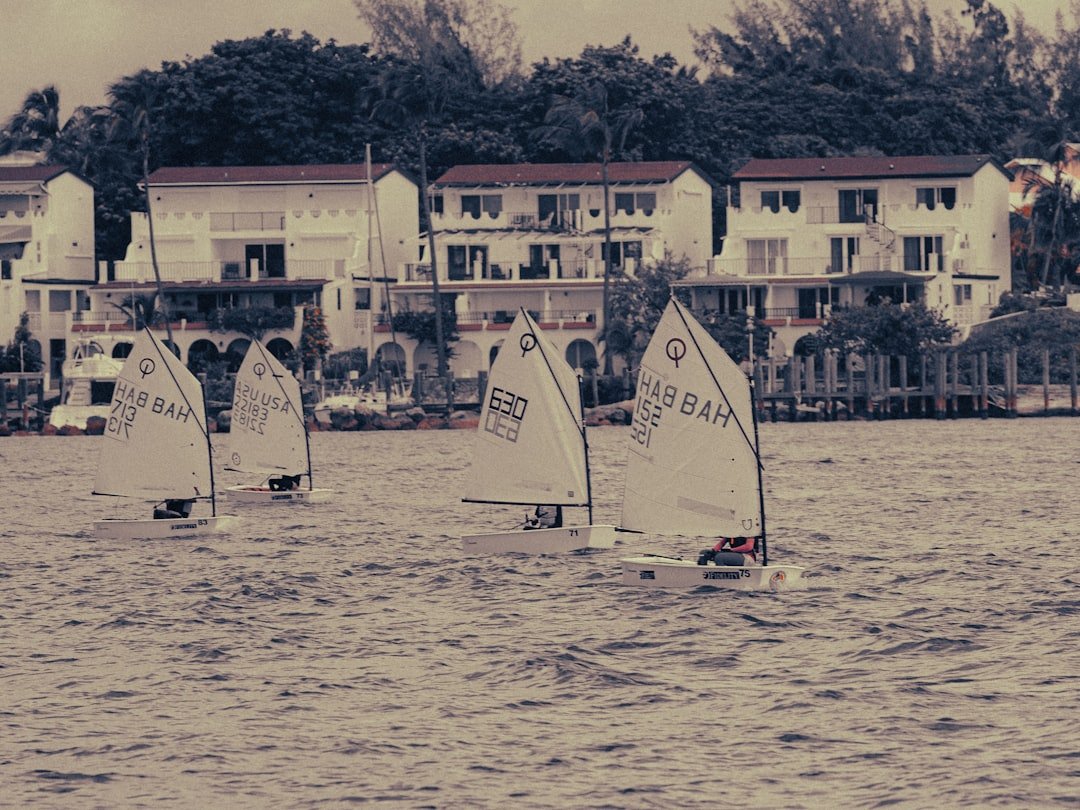
Children change the economics and culture of a yacht club. They bring parents into the building, create summer habits, justify training investment, produce future racers and volunteers, and make the club easier for outsiders to understand. A parent who did not grow up sailing may still enter the club because a child wants to learn. That is one of the most powerful entry routes the sport has.
The UK’s Royal Yachting Association is useful here because it shows the scale of the ecosystem behind club sailing. It represents more than 100,000 members, works with more than 24,000 instructors, around 250,000 volunteers and more than 2,000 recognised training centres. The numbers matter because they reveal what clubs are really built on: not only owners and boats, but a training and volunteer infrastructure that has to renew itself.
Junior sailing should therefore be treated less like seasonal programming and more like strategic development. The details decide whether it works: good instructors, clear progression, safe equipment, visible role models, affordable entry routes, communication with parents, proper child safeguarding and a culture that rewards competence rather than family status.
A yacht club that teaches children well has a future. One that treats children as decoration at prize-giving does not.
Women’s Participation Cannot Stay Symbolic
Many yacht clubs have women members. That is not the same as women’s authority.
The relevant test is not whether women are present in the dining room or on the membership list. It is whether they are visible as skippers, instructors, race officers, committee members, safety leads, coaches, boat owners and decision-makers. Girls in junior programmes see very quickly whose judgement is trusted. Adult women entering the sport later notice whether they are treated as serious learners or as an addition to the social side of the club.
This matters for growth as much as fairness. A club that underuses women’s competence narrows its own talent base. It loses instructors, volunteers, committee members, race organisers and future leaders. It also risks appearing culturally dated to families and younger members who expect authority to be earned on the water, not inherited through old social habits.
The better clubs do not turn women’s participation into a separate branding exercise. They normalise it operationally. Women teach, race, helm, manage safety, chair committees and lead programmes. That is more convincing than another “women in sailing” evening with no change in the power structure.
Racing Needs Translation, Not Dilution
Regattas remain the backbone of many yacht clubs. Racing creates discipline, skill, stories, hierarchy, rivalries and the reason for many members to appear every week. A club without competitive life can quickly become a waterfront restaurant with flags.
The weakness is that racing culture is hard to enter. Start sequences, protests, handicaps, crew roles, class rules and local habits can look impenetrable to anyone who did not grow up around them. Experienced sailors often forget how much informal knowledge they carry. If the club does not translate that knowledge, newcomers remain spectators.
Translation does not mean softening the sport. It means creating routes into it: novice race evenings, crew-matching boards, rules briefings, parent-and-child races, debriefs after club races, women’s race clinics, youth-to-adult progression and boats that allow members without ownership to participate. Done properly, racing becomes the club’s strongest recruitment tool rather than its most intimidating subculture.
A yacht club should protect competition because competition gives the institution seriousness. It should not allow competition to become a language only insiders can speak.
The Clubhouse Is Competing With Better Operators
The clubhouse used to benefit from captive demand. Members came because the club was the club. That is less reliable now.
A member compares the clubhouse not only with other yacht clubs, but with restaurants, private members’ clubs, boutique hotels, sports clubs, co-working lounges and family leisure venues. If the food is poor, the website outdated, the children unwelcome, the changing rooms tired and the events predictable, the view will not compensate forever.
This does not mean turning the clubhouse into a lifestyle concept. That would be the fastest way to alienate serious sailors. The better standard is practical hospitality: good coffee before racing, reliable food afterwards, a room that works for briefings, clean showers, storage that makes sense, staff who help newcomers orient themselves, and social events that reflect real family and working lives.
A yacht club does not need the atmosphere of a hotel. It needs to stop behaving as if basic service is beneath it.
Environmental Legitimacy Is Becoming Part Of The Licence To Operate
Sailing likes to describe itself as close to nature. The sport uses wind and water, which gives it a cleaner image than many forms of leisure. The material reality is more complicated. Boats, sails, resins, foams, antifouling, transport, engines, marinas and waste all carry environmental costs.
World Sailing’s recent decision to measure the environmental impact of Olympic-class equipment is therefore significant beyond the Olympics. It acknowledges that even a wind-powered sport has an industrial footprint. For yacht clubs, the message is clear: environmental credibility cannot remain at the level of beach clean-ups and vague language about loving the sea.
The practical agenda is wider: waste handling, antifouling practices, fuel management, shore power, electric safety boats where suitable, water-quality monitoring, member education, responsible event logistics, boat disposal, plastic reduction and partnerships with local environmental organisations. On lakes and protected coasts, these details are increasingly tied to public acceptance.
A club that occupies waterfront land has to show that it protects the water, not only uses it. That is no longer a public-relations preference. It is part of institutional risk management.
Digital Weakness Is A Cultural Signal
Many yacht clubs still communicate like committees talking to people already in the room. Long emails, outdated websites, hidden PDFs, unclear membership pages, slow responses, last-minute notices and fragmented WhatsApp groups create friction that outsiders experience immediately.
Digital communication is not a substitute for club culture. It is the doorway into it. A new member should be able to understand how to join, where to park, how training works, what a race evening involves, whether guests are allowed, what clothing is needed, how much membership costs and whom to contact. A parent should not need insider knowledge to book a junior course. A visiting sailor should not need three phone calls to understand berthing arrangements.
The irony is that many clubs are full of people capable of organising complex racing on difficult water, yet they fail at simple communication. That failure now reads as more than administrative weakness. It suggests the club has not yet accepted that accessibility starts before anyone arrives at the pontoon.
The Swiss Lesson: Prestige Without Spectacle
Switzerland offers a useful contrast to the Mediterranean superyacht world. Its yacht clubs and harbours sit on lakes used by residents, ferries, swimmers, paddleboarders, restaurants and public promenades. The club cannot rely on distance from civic life. It has to coexist with it.
The Société Nautique de Genève, with more than 3,800 members and a history connected to Olympic sailing and the America’s Cup through Alinghi, shows how a club can carry prestige without needing the theatre of a superyacht marina. The value lies in continuity, sporting seriousness, local identity and the ability to connect a private institution with a broader water culture.
That model is increasingly relevant. Many clubs in wealthy markets cannot defend themselves through exclusivity alone. They need to show why their presence improves the waterfront: through sport, youth training, events, environmental standards, rescue culture, technical knowledge and a disciplined relationship with the water.
Swiss lake culture also underlines a point that more clubs will face: discretion can be stronger than display. A club that is orderly, competent and socially confident does not need to perform privilege. It needs to be useful.
Boat Clubs Are A Warning From The Market
The growth of commercial boat clubs should not be dismissed as a lower form of boating. It is a signal from the customer.
The customer wants easier access, transparent costs, less maintenance and less anxiety. He may still admire a traditional yacht club, but admiration does not automatically produce membership. If the first step into boating requires social navigation before water navigation, many people will choose the commercial alternative.
Traditional clubs have stronger assets if they use them well. They have history, volunteers, racing, local knowledge, training, junior structures, club fleets, member loyalty and often better waterfront positions. But those assets need translation into a contemporary offer.
A club-owned fleet can lower the ownership barrier. Crew banks can bring non-owners into racing. Training can move people from curiosity to competence. Membership categories can reflect different life stages. Partnerships with schools, universities, hotels, marinas or boat-rental platforms can bring new people to the water without turning the club into a commercial operator.
The point is not to become Freedom Boat Club. The point is to understand why Freedom Boat Club is growing.
The Committee Model Needs Professional Support
Many yacht clubs depend on volunteers. That is a strength and a weakness.
Volunteers carry institutional memory, reduce costs and create belonging. They also burn out. A club that relies on the same people to manage racing, maintenance, junior sailing, communications, events, compliance and member disputes will eventually find that goodwill becomes a bottleneck.
As clubs become more complex, some functions need professional support: administration, safeguarding, digital systems, maintenance coordination, hospitality, environmental compliance, training management and communications. This does not undermine the volunteer spirit. It protects it. Members should give energy to the club, not rescue it from avoidable operational failure.
The clubs that professionalise selectively will be better placed than those that either commercialise completely or romanticise amateur management beyond its limits.
The Club Has To Decide What Kind Of Institution It Is
The most difficult question is not whether the club should modernise. It is what kind of club it wants to be.
Some clubs are racing institutions. Some are family sailing clubs. Some are harbour communities. Some are training centres. Some are private social clubs with boats attached. Some are civic sporting institutions occupying valuable public-facing land. A club can combine several roles, but only if the hierarchy is clear.
Without that clarity, every decision becomes confused. Membership categories, restaurant investment, junior fees, volunteer duties, digital systems, boat access, social events and environmental projects all pull in different directions. Members argue about symptoms because the institution has not agreed on the purpose.
The better clubs will not chase modernity as an aesthetic. They will define their role more precisely and then build around it.
The Yacht Club Still Has An Advantage
It would be easy to write the yacht club off as a relic. That would be wrong. The best clubs hold something the market struggles to manufacture: trust, continuity, skill, memory, local knowledge and intergenerational contact with the water.
Commercial operators can sell access. Restaurants can sell the view. Marinas can sell berths. Hotels can sell waterfront hospitality. A serious yacht club can connect all of those things to competence. It can teach a child to sail, give a teenager responsibility, help an adult enter racing, preserve local weather knowledge, organise regattas, support safety culture and create a social world around a shared discipline.
That is a strong proposition, but only if the club remains alive enough to deliver it. Tradition has to become an operating asset. If it becomes a screen for weak service, unclear entry, male-coded authority, tired facilities and environmental complacency, it will invite competition and civic pressure.
The yacht club is changing because the waterfront around it has changed. Ownership is no longer the only entry point. Public land is more contested. Families expect usability. Women expect authority. Younger members expect transparency. Environmental claims need evidence. Digital competence is basic. The clubs that understand this will not become less serious. They will become harder to replace.
Research note for your review, not for publication: I used current RYA data on membership, training centres, instructors and volunteers; the RYA’s own warning that UK sailing and boating participation is in decline; World Sailing’s 2026 environmental life-cycle assessment project for Olympic equipment; Freedom Boat Club’s 2025 usage figures and global footprint; and background on Société Nautique de Genève.