
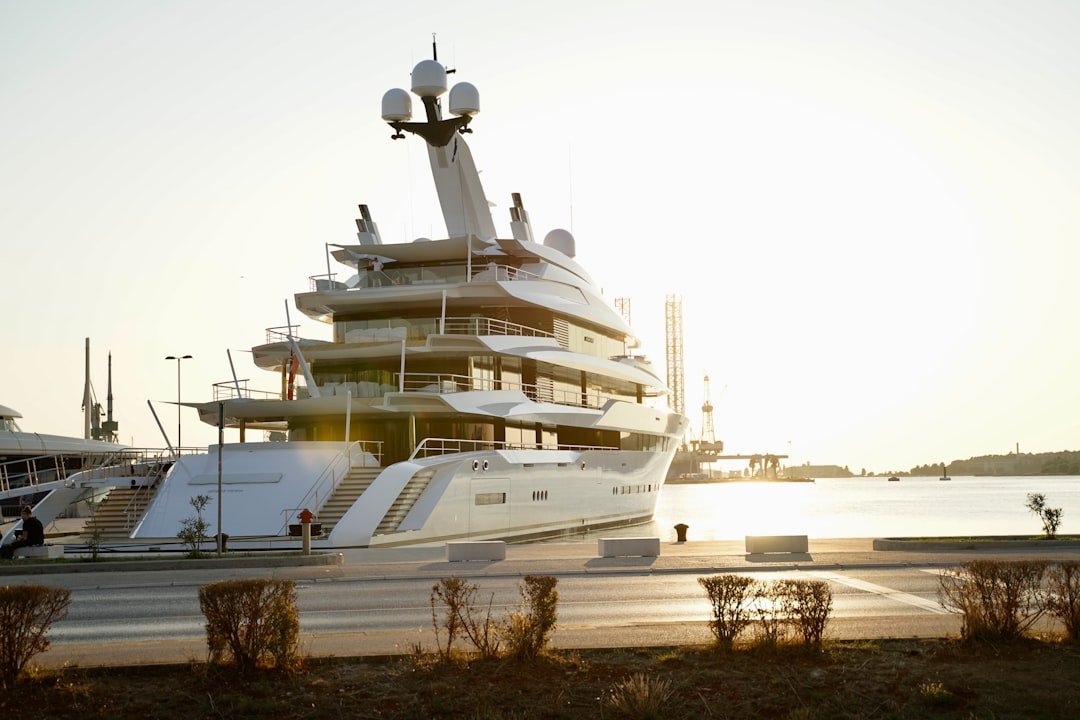
The New Yacht Status Symbol Is Not Size
The easiest way to understand yacht status used to be to look at length. The larger the yacht, the clearer the signal. A 30-metre yacht suggested success; a 60-metre yacht suggested serious wealth; anything above that entered the world of billionaires, royalty, global entrepreneurs and names that rarely appear on ownership documents.
Size still matters. It gives space, range, crew capacity, privacy and the kind of technical possibilities that smaller vessels cannot always offer. But in modern yachting, length alone has become a rather blunt measure of luxury. The more interesting question is no longer simply, “How big is it?” It is, “What kind of life does this yacht make possible?”
That shift says a great deal about how wealth itself is changing. Today’s yacht owners and charter guests are often less interested in obvious display and more interested in freedom, discretion, design intelligence, wellness, environmental awareness and access to places that still feel rare. A yacht is still a status symbol, but the status is becoming quieter, more personal and more sophisticated.
From Floating Mansion To Private World
The old superyacht ideal was relatively easy to recognise: multiple decks, glossy interiors, formal dining rooms, marble bathrooms, a large crew and enough volume to make a harbour stop feel like an entrance. It was a floating mansion, and in many cases, that was precisely the point.
The newer idea of yacht luxury is less theatrical. Owners and charter guests still want beauty, comfort and exceptional service, but they are also asking for something more difficult to display from the outside: a private world that works exactly as they need it to.
For one owner, that might mean a yacht designed around family life, with generous outdoor spaces, safe access to the sea, shaded decks and cabins that make multi-generational travel easy. For another, it might mean a wellness-focused vessel with a gym, sauna, cold plunge, massage room and quiet sleeping areas. For a younger founder or investor, it may mean full connectivity, a private office, video-call spaces and the ability to work from the water without feeling cut off from the business. Recent reporting on superyacht design has highlighted precisely this shift, with owners asking for features such as serious gyms, hyperbaric chambers, better work-from-yacht arrangements and improved connectivity.
This is where status becomes more subtle. The yacht is no longer impressive only because it is large. It is impressive because it has been designed around a specific life.
Privacy Has Become The Real Luxury
The more public life becomes, the more valuable privacy feels. For high-profile owners and charter guests, a yacht offers something that even the best hotel or villa cannot always provide: control over access, movement, staff, schedule and exposure.
This does not mean secrecy in a dramatic sense. It means not having to pass through a lobby. Not being photographed at breakfast. Not hearing other guests around the pool. Not having to explain who is staying, who is visiting, or where dinner will be. On a yacht, the day can be visible only to the people invited into it.
That is why discretion has become a more powerful signal than spectacle. The most desirable yacht experience may not be the one that attracts the most attention in Monaco or St Barths, but the one that allows its guests to disappear into a quiet anchorage, swim before breakfast, take calls in peace and move between places without leaving a social trace.
This has changed the aesthetic of yachting too. Some owners still want dramatic exteriors and recognisable profiles, but others prefer understatement: softer lines, less aggressive styling, natural materials, calm interiors and spaces that feel residential rather than performative. The goal is not to make everyone look. It is to make the people on board feel entirely removed from the noise.
Design Intelligence Is Replacing Pure Display
A large yacht can still feel poorly designed. A smaller yacht can feel exceptional if the layout is intelligent, the crew flow works, the cabins are quiet, the outdoor spaces are generous and the connection to the sea is immediate.
This is one of the biggest differences between old and new yacht status. In the past, volume itself carried prestige. Today, experienced owners and charter guests notice how that volume is used.
Can people move from the water to the deck without awkward steps and narrow passages? Is there a shaded place to eat outside at midday? Can children swim safely while adults relax nearby? Are the cabins placed where they are least affected by motion and noise? Does the interior feel calm during the day and atmospheric in the evening? Are the crew able to deliver excellent service without constantly crossing through guest areas?
These are not decorative details. They shape the entire experience. A yacht that looks impressive in photographs may feel inconvenient in daily use, while another with less obvious glamour may be far more comfortable, private and functional.
The best modern yachts are increasingly judged by this kind of intelligence. The luxury is not only in what has been added, but in what has been considered.
The Rise Of Wellness At Sea
Wellness has become one of the clearest signs that yacht luxury is changing. A decade ago, a gym on board was a desirable feature. Today, the conversation is broader: movement, recovery, sleep, nutrition, mental decompression and the health benefits of time close to the sea.
This reflects a wider change in luxury travel. Many affluent travellers no longer want holidays that leave them exhausted. They want to return sharper, calmer and physically better than when they arrived. A yacht is especially well suited to that expectation because it can combine privacy, nature, routine and personal service in one controlled environment.
A wellness-focused charter might include sunrise training on deck, swimming in quiet bays, tailored menus, massage, yoga, breathwork, sleep-friendly cabins and a schedule that is not overfilled with restaurant bookings and late nights ashore. For owners, wellness can also influence the yacht’s architecture: larger gyms, spa areas, beach clubs, saunas, cold plunges, treatment rooms and quieter interiors.
Again, the point is not necessarily size. A wellness yacht does not have to be the largest yacht in the marina. It has to make guests feel restored. That is a different kind of status, and arguably a more modern one.
Sustainability Is Becoming A Social Signal
Yachting has an obvious tension with sustainability. Large vessels consume resources, and the industry cannot credibly pretend otherwise. But this is exactly why more owners, builders and charter guests are paying attention to fuel efficiency, hybrid propulsion, smarter energy systems, responsible materials, waste management and lower-impact cruising.
The signal is changing. In certain circles, pure excess can now look outdated. A more sophisticated owner wants to know how the yacht performs, how efficiently it operates at anchor, how much noise it produces, what materials were used, how the crew handles waste and whether the itinerary respects protected marine environments.
Hybrid systems, electric tenders, better insulation, efficient air-conditioning, alternative decking materials and silent anchoring are not just technical upgrades. They are part of a broader redefinition of taste. Recent superyacht design commentary has pointed to growing interest in energy-saving features, alternatives to traditional teak, electric concepts and more environmentally conscious design choices.
Of course, sustainability in yachting is complicated. A hybrid yacht is not automatically “green”, and a marketing brochure can make almost anything sound responsible. The more credible direction is not perfection, but measurable improvement: lower emissions where possible, less waste, better systems, more careful itineraries and honest communication about trade-offs.
For a certain type of owner, that honesty is becoming part of the appeal. The new status symbol is not pretending that impact does not exist. It is showing that impact has been considered.
Access Matters More Than Theatre
There is also a shift from owning the most visible yacht to accessing the most interesting places. The ultimate luxury may be less about being seen in a famous harbour and more about reaching a bay, island or coastline that still feels relatively untouched.
This is why destination choice has become more important. The Mediterranean classics will always matter: the French Riviera, Sardinia, Amalfi, Croatia, Greece and the Balearics are not going away. But experienced charter guests are also looking beyond the predictable circuit. They want quieter parts of Greece, emerging Adriatic routes, Turkey, Montenegro, the Red Sea, Indonesia, the South Pacific, Norway, Scotland, Greenland or expedition-style itineraries that offer something more memorable than another lunch reservation in a famous port.
This changes what makes a yacht desirable. Range, stability, storage, tender capability, crew expertise and local knowledge can be more valuable than a few extra metres of length. A yacht that can take guests somewhere extraordinary, comfortably and safely, may feel more luxurious than a much larger vessel doing the same crowded summer route as everyone else.
In that sense, access has become a status symbol. Not access in the social sense, but geographical and experiential access: to silence, nature, difficult-to-reach places and days that cannot easily be replicated.
The Marina Problem Is Also Changing The Status Equation
There is a practical reason why bigger is not always better: space is becoming more constrained. Demand for yacht ownership and marina berths has grown, while new marina development is often limited by regulation, geography and environmental concerns. A recent Financial Times report noted strong investor interest in marinas, describing a structural shortage of berths and citing McKinsey’s estimate that the global marina market is worth about $15 billion and could grow by 8% annually.
This matters because yacht size has consequences. Larger yachts need suitable berths, deeper water, more complex logistics and greater operating costs. In peak Mediterranean season, the most glamorous destination can quickly become a negotiation over space, timing and access.
That does not mean large yachts are becoming impractical for the ultra-wealthy. It means experienced owners understand that length brings both privilege and friction. A slightly smaller, better-designed yacht with more flexible cruising possibilities may be more enjoyable than a larger vessel that is harder to berth, operate and use spontaneously.
Modern status is therefore becoming more operationally intelligent. It is not only about what the yacht represents. It is about how easily it lets the owner live.
Crew Quality Is Part Of The Luxury
A yacht can be beautifully designed and still fail as an experience if the crew is wrong. For charter guests especially, the crew often determines whether the week feels merely expensive or genuinely exceptional.
This is another reason why size is no longer the only signal. The best crew understand anticipation, discretion, safety, timing, humour, cultural sensitivity and invisible service. They know when to appear and when to disappear. They can read whether guests want a formal dinner, a relaxed lunch, a quiet morning or a last-minute change of plans. They know the anchorages, restaurants, beach clubs, weather patterns and local rules. They make the yacht feel effortless.
In luxury hospitality, the human element is increasingly difficult to replace. Technology can improve systems, stabilisation, connectivity and navigation, but it cannot fully replicate judgement. A crew that understands the guests can make even a relatively modest yacht feel deeply luxurious. A poor crew can make a much larger yacht feel cold, awkward or badly managed.
The status, then, is not simply in owning space. It is in having a world that is beautifully run.
Quiet Luxury At Sea
The phrase “quiet luxury” is overused on land, but at sea it still captures something real. The most sophisticated yacht experiences are not always the loudest, largest or most visually aggressive. They are often the ones where everything has been thought through and very little needs to be explained.
Quiet luxury at sea might mean an interior that does not date quickly. It might mean excellent coffee at sunrise without anyone asking. It might mean a beach club that makes swimming effortless, a cabin where guests sleep properly, a crew that remembers preferences without being intrusive, or an itinerary that avoids the obvious crowd at exactly the right time.
It is the opposite of performance luxury. It does not need every surface to announce cost. It relies on proportion, comfort, materials, silence, privacy and judgement.
For a new generation of owners and charter guests, that may be the most attractive signal of all. Not “look how much I have”, but “look how well I understand what matters”.
Technology Is Becoming Invisible
Technology is also changing the meaning of yacht status, but not always in the obvious way. The most desirable technology is often the technology guests barely notice.
Better stabilisation means more comfort underway and at anchor. Smarter navigation and weather tools help captains plan smoother passages. Improved connectivity allows guests to work, stream, communicate and manage business without frustration. AI-supported systems, predictive maintenance and integrated yacht management can help owners reduce downtime and improve operations. Industry trend reports for 2026 have pointed to hybrid systems, AI-enabled onboard systems, seamless connectivity and quieter cruising as important directions for the sector.
But technology becomes truly luxurious when it disappears into the experience. Guests do not want to think about bandwidth, engine systems, energy management or stabilisers. They simply want the yacht to feel calm, connected, safe and easy.
That is another move away from size as the main status marker. The most impressive feature may not be visible from the dock. It may be the fact that the yacht is silent at anchor, stable in a swell, efficient in operation and connected enough for someone to run a company from the middle of the sea.
The New Status Is Personal
The most important change is that yacht status has become more personal. There is no longer one single definition of the ideal yacht.
For some, the dream is still a large superyacht with a full crew, formal service and global visibility. For others, it is a fast, elegant boat for weekends between islands. Some want a family yacht with comfort and safety. Some want a sailing yacht that feels connected to the elements. Some want an expedition vessel that can reach remote coastlines. Others want charter access without the burden of ownership.
This variety is important. It suggests that the yacht is becoming less of a universal trophy and more of a personal instrument. The best yacht is not necessarily the largest. It is the one that best reflects how its owner or guests want to live.
That may sound obvious, but it is a meaningful shift in a world long dominated by length rankings and harbour visibility. A yacht can still communicate wealth, but the more refined signal is now taste: what has been chosen, what has been rejected and what kind of life the vessel enables.
What This Means For Charter Guests
For charter guests, this shift is good news. It means the smartest choice is not automatically the largest yacht within budget. The better question is what kind of experience you want.
A couple planning a romantic Mediterranean week may prefer a smaller yacht with beautiful outdoor dining, a strong crew and access to quiet anchorages. A family may need cabin layout, water toys, safety and flexible meals more than dramatic styling. A group of friends may care about deck space, music, tenders and beach club access. A wellness-focused guest may prioritise sleep, food, swimming and calm over nightlife.
The same logic applies to destination. The most famous route is not always the best route. The most photographed harbour is not always the most enjoyable place to spend the night. A good broker, captain or charter manager can help match the boat to the people, not just the budget to the brochure.
This is where modern yacht luxury becomes more interesting. It is less about impressing strangers and more about designing time well.
What This Means For Owners
For owners, the shift is even more significant. Buying or building a yacht is not only a financial decision; it is a lifestyle decision with operational, environmental, reputational and emotional dimensions.
A yacht that is too large, too formal or too complicated for the owner’s actual habits can become a burden. A yacht that fits the owner’s real life can become one of the most rewarding assets they own. That means asking sharper questions early: How often will it be used? By whom? In which regions? For business or family? For privacy or entertaining? With how much crew? With what tolerance for operating costs, refit schedules and environmental scrutiny?
The best new yachts are not simply bigger versions of old yachts. They are more precise. They reflect a more honest understanding of how people with means actually want to spend their time.
The Future Of Yacht Status
The yacht will always remain a symbol of wealth. There is no point pretending otherwise. But the nature of that symbol is changing.
In the old version, status was measured from the dock: length, height, shine, spectacle. In the new version, status is felt on board: privacy, comfort, silence, intelligence, freedom, sustainability, crew quality and access to extraordinary places.
Size still has its place, especially when it supports range, safety, comfort and ambition. But size without purpose is beginning to look less sophisticated. The more modern yacht does not simply ask to be admired. It works beautifully for the people who use it.
That may be the new definition of yacht status: not the biggest boat in the harbour, but the one whose owner no longer needs to prove anything.

